

Hiring a Virtual Medical Scribe: 7 Critical Criteria for Clinical Excellence
Physician burnout has reached a critical tipping point in modern healthcare, with 74.5% of doctors citing electronic health record (EHR) documentation as a primary driver of their professional exhaustion. This statistic is not merely a number; it represents a systemic failure in workflow design that directly impacts patient safety and provider longevity. When you are considering a remote medical scribe, you are not just buying a service. You are investing in a strategic operational partner who will handle sensitive patient data, interpret clinical nuances, and integrate seamlessly into your existing electronic medical record (EMR) infrastructure. The decision to outsource documentation requires rigorous vetting to ensure that the quality of care remains uncompromised. This guide outlines the seven essential criteria you must evaluate before signing a contract with a virtual scribe provider.
1. Security and HIPAA Compliance Infrastructure
The most non-negotiable requirement for any virtual medical scribe service is ironclad data security. Because your scribe will be listening to patient-provider interactions in real-time, they are handling Protected Health Information (PHI). A compliant provider must demonstrate a multi-layered security architecture that extends beyond standard software encryption.
When evaluating a vendor, ask specifically about their workspace security protocols. For instance, My Virtual Scribe emphasizes the use of VPN-powered workspace security to ensure that all data transmissions are encrypted and isolated from public networks. You must verify that the provider conducts regular background checks on their scribes and enforces strict access controls. If a provider cannot clearly articulate their data protection strategy, including how they handle device loss or network breaches, you should proceed with extreme caution. The risk of a data breach can devastate a practice financially and reputationally.
2. Specialized EHR Proficiency and Integration
Not all electronic health record systems are created equal. A virtual scribe who is proficient in Epic may struggle significantly with Cerner or AthenaHealth. The ideal candidate for your practice must possess deep, hands-on experience with the specific EMR platform your clinic utilizes. This proficiency goes beyond basic navigation. It involves understanding your specific templates, order sets, and documentation shortcuts.
Ask potential providers about their onboarding process for EHR training. Do they offer specialized training modules for your specific software? A high-quality scribe service will have a dedicated training department that ensures their staff can navigate your system efficiently without disrupting the patient flow. Look for providers who explicitly state their compatibility with major EHR systems and can provide case studies demonstrating successful integration with your specific software environment.
3. Clinical Training and Medical Terminology
A virtual scribe is not a generic administrative assistant. They are clinical documentation specialists who must understand the language of medicine. This includes complex medical terminology, pharmacology, anatomy, and pathophysiology. The depth of their training determines the accuracy of the notes they produce, which directly impacts your billing accuracy and legal defensibility.
Medical documentation is the process of recording patient care details in a standardized format. When hiring, inquire about the educational background of their scribes. Do they hold degrees in health sciences? Do they undergo continuous education to stay updated on coding changes and clinical guidelines? A scribe with a strong clinical foundation will anticipate your needs, such as pre-populating relevant past medical history or suggesting appropriate diagnostic codes, rather than simply transcribing words verbatim.
4. Specialty-Specific Documentation Nuances
Documentation requirements vary drastically across medical specialties. A dermatologist needs detailed lesion descriptions and body maps, while a psychiatrist requires nuanced mental status examinations and medication management notes. A generalist scribe may miss the critical details that define your specialty.
Look for providers who offer specialized scribe teams. For example, My Virtual Scribe offers tailored services for dermatology, optometry, and oncology, ensuring that the scribes understand the unique workflows of each field. When interviewing a vendor, ask if they have scribes who have previously worked in your specific specialty. This experience reduces the learning curve and ensures that the notes generated are immediately usable and clinically relevant.
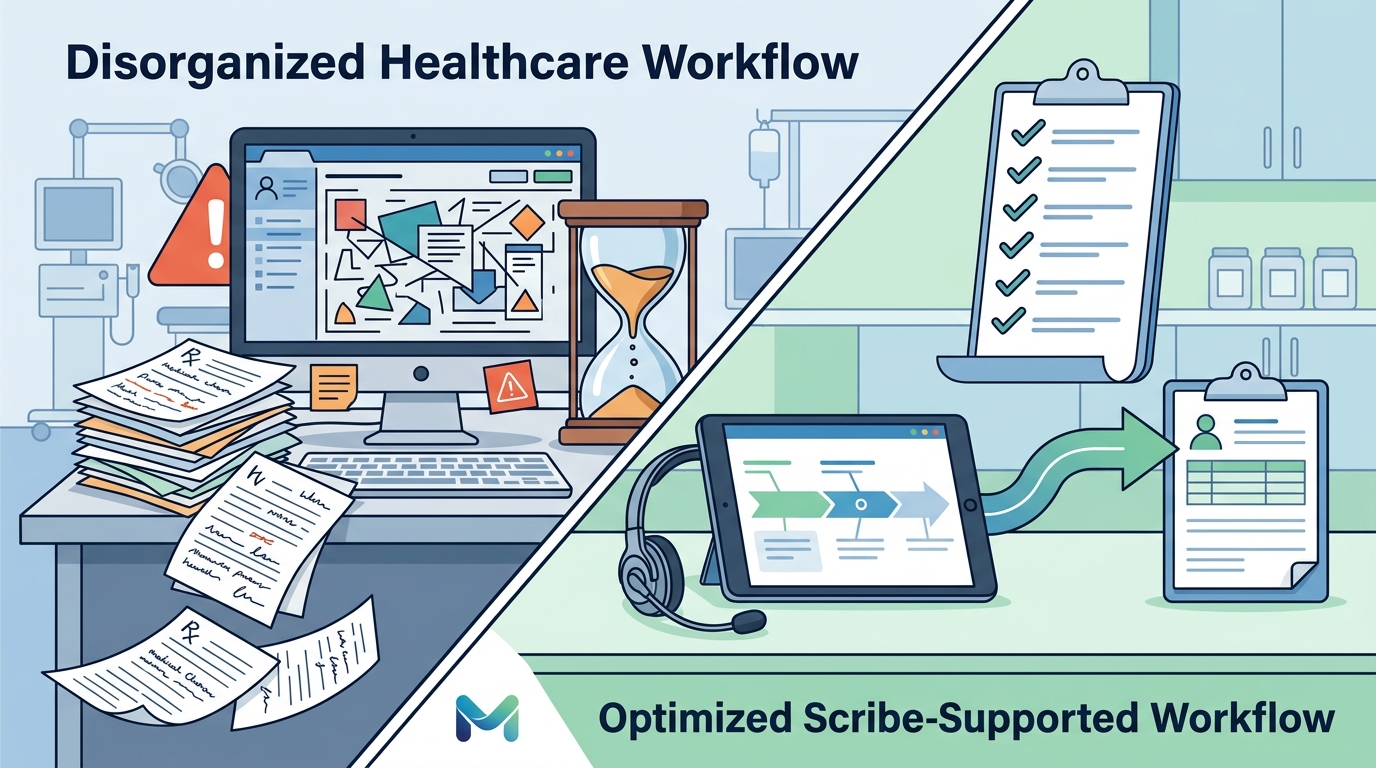
5. Workflow Integration and Real-Time Sync
The value of a virtual scribe lies in their ability to work in real-time without being present in the room. This requires a seamless technical setup that allows the scribe to hear the patient and provider clearly and type notes simultaneously. The latency between the consultation and the note finalization must be minimal to allow for timely signing and billing.
Evaluate the provider's technology stack. Do they provide high-quality audio equipment for the provider? Is their platform user-friendly and reliable? A good scribe service will guide you through the technical setup, ensuring that your exam rooms are equipped with the necessary hardware to capture clear audio. Additionally, ask about their backup protocols. If the internet connection fails, how does the scribe ensure that the patient data is not lost? Robust contingency planning is a sign of a mature and reliable service provider.
6. Quality Assurance and Feedback Loops
Even the best scribes make mistakes. The differentiator between a good and great scribe service is their quality assurance (QA) process. You need a provider that actively monitors the notes produced by their scribes to ensure accuracy, completeness, and compliance with your practice standards.
Ask about their QA frequency and methodology. Do they have a dedicated QA team that reviews a percentage of notes daily? How do they handle errors? A transparent provider will have a clear feedback loop where you can report issues, and the scribe will be retrained or corrected promptly. This continuous improvement cycle ensures that the quality of documentation remains high over time, protecting your practice from audit risks and billing denials.
7. Transparent Pricing and Scalability
Cost is a significant factor in the decision-making process, but it should not be the only one. Virtual scribe services typically operate on a subscription or hourly model. You must understand the full cost structure, including any setup fees, training costs, or minimum hour requirements.
Compare the cost of a virtual scribe against the value they provide. According to the American Medical Association, scribes can save physicians up to 66 minutes per shift. When you calculate the value of that reclaimed time, the cost of the service often becomes negligible. Look for providers who offer flexible pricing models that allow you to scale up or down based on your patient volume. This flexibility ensures that you are not paying for unused hours during slow periods.
Comparison of Key Evaluation Criteria
| Criteria | Why It Matters | Key Question to Ask |
|---|---|---|
| Security | Prevents data breaches and ensures HIPAA compliance. | What VPN and encryption protocols do you use? |
| EHR Proficiency | Ensures efficient documentation and billing. | Are your scribes certified in our specific EMR? |
| Clinical Training | Guarantees accurate medical terminology and coding. | What is the educational background of your scribes? |
| Specialty Fit | Addresses unique documentation needs of your field. | Do you have scribes with experience in my specialty? |
| QA Process | Maintains high standards and reduces audit risk. | How do you monitor and correct scribe errors? |
Key Takeaways
- Burnout Reduction: Scribes can save physicians an average of 66 minutes per shift, directly combating burnout.
- Patient Satisfaction: 57% of patients report better interactions when their doctor is assisted by a scribe.
- Security First: Always verify VPN-powered workspace security and HIPAA compliance before hiring.
- Specialty Expertise: Choose a provider with scribes trained in your specific medical field.
- EHR Integration: Ensure the scribe is proficient in your specific electronic medical record system.
- Quality Assurance: Look for providers with robust QA processes to ensure note accuracy.
- Flexible Pricing: Opt for scalable pricing models that align with your patient volume.
Frequently Asked Questions
How much does a virtual medical scribe cost?
Pricing varies by provider and service level, but many virtual scribe services offer competitive rates that are offset by the time saved and improved billing efficiency. Some providers, like My Virtual Scribe, offer affordable subscription models starting at reasonable monthly rates.
Are virtual medical scribes HIPAA compliant?
Yes, reputable virtual scribe services are fully HIPAA compliant. They use encrypted connections, secure workspaces, and conduct background checks on all staff to protect patient privacy.
Can a virtual scribe work with any EHR system?
Most virtual scribes are trained in major EHR systems like Epic, Cerner, and AthenaHealth. However, it is crucial to confirm that the provider has specific experience with your system to ensure a smooth integration.
How does a virtual scribe listen to the patient?
Providers typically use a tablet or laptop with a high-quality microphone placed in the exam room. This allows the scribe to hear the conversation clearly while maintaining the patient's privacy and the doctor's focus.
What is the difference between a virtual scribe and a medical transcriptionist?
A medical transcriptionist listens to recorded audio and types it up later, which can introduce delays. A virtual scribe works in real-time, documenting the visit as it happens, which allows for immediate signing and billing.
Do virtual scribes handle billing?
While their primary role is documentation, many virtual scribes are trained in medical coding and can assist with accurate coding to maximize reimbursement. However, they do not typically handle the actual billing submission process.
How long does it take to onboard a virtual scribe?
Onboarding typically takes a few days to a week, depending on the complexity of your EHR system and the scribe's existing experience. Providers often include training to ensure the scribe is fully integrated into your workflow.
Ready to Reclaim Your Time?
Stop letting documentation dictate your day. By hiring a qualified virtual medical scribe, you can reduce burnout, improve patient satisfaction, and focus on what matters most: your patients. Take the first step toward a more efficient practice by exploring our services. Contact My Virtual Scribe today to schedule a consultation and discover how we can transform your workflow.