

Physician burnout is no longer just a professional hazard; it is a systemic crisis driven by administrative overload. According to recent data from PubMed, 74.5% of physicians cite EHR documentation as a major factor in their burnout. This statistic highlights a critical inefficiency in modern healthcare: the more time a doctor spends documenting, the less time they have for the actual practice of medicine. The solution lies in delegating this burden to a remote medical scribe, a service that fundamentally restructures the clinical workflow to prioritize human connection over digital entry. (Hiring a Virtual Assistant)
How Remote Scribes Reclaim Your Time
The traditional model of medical documentation requires the physician to act as both clinician and data entry clerk. This dual role creates a cognitive load that fragments attention. A remote medical scribe interrupts this cycle by providing real-time, auditory documentation support from a secure, off-site location. This process is not merely about typing; it is about seamless clinical integration.
When you engage with a remote scribe service, the workflow begins with a secure connection. The scribe joins your virtual examination room via a HIPAA-compliant platform. They listen to the patient history, the physical exam findings, and your clinical decision-making process. Instead of you turning away from the patient to type into the Electronic Health Record (EHR) system, the scribe captures the narrative in real time. This allows you to maintain eye contact and physical presence with the patient throughout the entire consultation.
The scribe then processes this data directly into your EMR or EHR system. This step ensures that the documentation is accurate, complete, and ready for your final review and signature. By removing the mechanical act of documentation from your immediate attention, you regain the mental bandwidth required for complex diagnostic reasoning. This shift transforms the appointment from a data-entry session back into a patient-centered encounter.
The Data on Interaction Quality
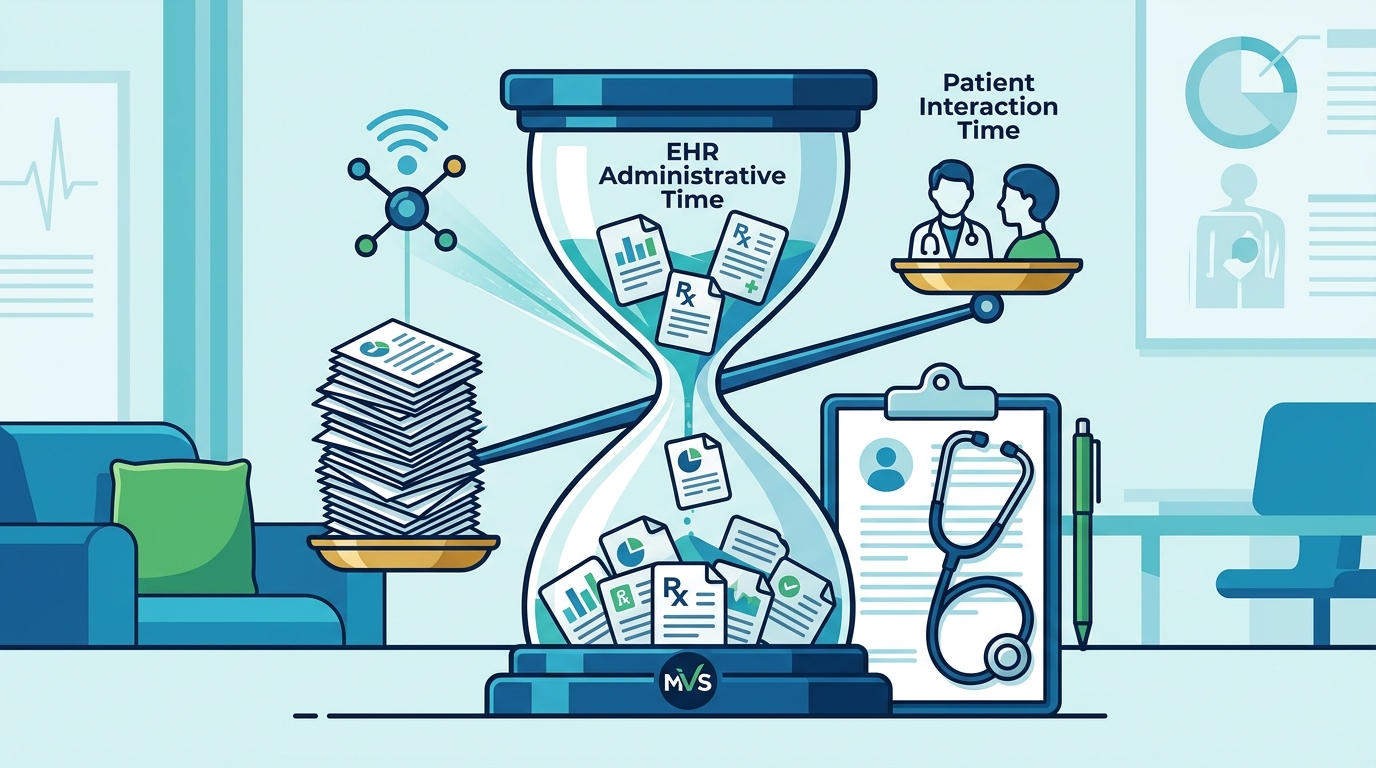
The benefits of this workflow shift are not just theoretical; they are quantifiable. The American Medical Association has reported that physicians save an average of 66 minutes per 8-hour shift when utilizing a medical scribe. This is not merely "free time"; it is time reclaimed for patient care, administrative closure, and personal well-being. When you save over an hour a day, you reduce the likelihood of working late into the evening to complete notes.
Furthermore, the quality of the interaction improves significantly. Data from the American Medical Association indicates that 57% of patients report better interactions when their doctor is assisted by a scribe. This improvement stems from the physician's ability to focus entirely on the patient's narrative without the distraction of screen-gazing. Patients perceive this undivided attention as a sign of respect and competence, which directly enhances trust and compliance with treatment plans.
For practices managing high volumes of patients, this efficiency compounds. If each appointment gains even five minutes of focused interaction time, the cumulative effect on daily patient throughput and satisfaction is substantial. The remote model eliminates the logistical friction of scheduling an on-site scribe, ensuring that this efficiency is available every single day, regardless of your physical location.
Specialty-Specific Workflow Adjustments
Not all medical practices have the same documentation demands. A remote scribe service must be adaptable to the specific linguistic and procedural nuances of your specialty. My Virtual Scribe (MVS) provides tailored support for various medical fields, ensuring that the scribe understands the context of the documentation.
For dermatologists, the scribe must be adept at describing lesion morphology, size, and location with precision. In oncology, the focus shifts to complex treatment regimens, chemotherapy protocols, and symptom management histories. Dental practices require scribes who can quickly document procedure codes and patient hygiene instructions. Each specialty demands a scribe who is not just a typist, but a trained medical professional who understands the clinical significance of the data being captured.
This specialization ensures that the documentation is not only fast but also clinically accurate. A generic scribe might miss the nuance of a dermatological description or the urgency of an oncology update. By hiring a scribe trained in your specific field, you ensure that the EHR reflects the true complexity of your patient's condition. This reduces the need for post-visit chart correction, further saving time and reducing cognitive fatigue.
In-Person vs. Remote Scribe Models
Historically, medical scribes were primarily on-site. While effective, this model comes with significant logistical and financial constraints. The table below outlines the key differences between traditional on-site scribes and modern remote scribe services.
| Feature | On-Site Scribe | Remote Scribe (MVS Model) |
|---|---|---|
| Availability | Limited by local talent pool | 24/7 global availability |
| Cost Structure | Higher (salary, benefits, office space) | Flexible, hourly or monthly rates |
| Logistics | Requires physical workspace in clinic | Connects via secure laptop/tablet |
| Privacy | Physical separation challenges | Encrypted VPN and HIPAA compliance |
| Scalability | Difficult to scale quickly | Instant scaling based on patient load |
The remote model offers superior scalability. If your patient volume spikes, you can adjust your scribe hours instantly without the long-term commitment of hiring full-time staff. This flexibility is crucial for small practices and solo practitioners who need to manage cash flow carefully. Additionally, the remote model eliminates the need for physical workspace within the clinic, allowing you to maximize your clinical square footage for patient care rather than administrative support.
Key Takeaways
- Time Reclamation: Physicians save an average of 66 minutes per shift using scribes, directly increasing patient interaction time.
- Burnout Reduction: 74.5% of physicians cite EHR documentation as a primary cause of burnout, a problem remote scribes directly mitigate.
- Patient Satisfaction: 57% of patients report better interactions when their doctor is assisted by a scribe due to increased eye contact and focus.
- Specialty Adaptation: Remote scribes can be trained in specific fields like dermatology, oncology, and dentistry for accurate documentation.
- HIPAA Compliance: Remote scribe services utilize encrypted VPNs and secure workspaces to ensure patient data privacy.
- Founder Expertise: My Virtual Scribe was founded by Dr. Behzad Ourmazdi, a neurologist with over 20 years of clinical experience.
- Operational Flexibility: Remote scribes connect via laptop or tablet, requiring no physical presence in the clinic.
Frequently Asked Questions
How does a remote scribe ensure patient privacy?
Remote scribes use secure, HIPAA-compliant platforms and encrypted VPNs to access your EHR system. They work from private, secure locations to ensure that patient data is never exposed to unauthorized individuals.
Can a remote scribe handle complex medical terminology?
Yes. My Virtual Scribe employs trained medical professionals who are educated in medical terminology. They are specifically trained in various specialties, including neurology, dermatology, and oncology, to ensure accurate documentation.
What is the cost of hiring a remote medical scribe?
The cost varies based on the number of hours and the specific specialty requirements. My Virtual Scribe offers competitive rates designed to be affordable for small practices and solo practitioners, often resulting in a net positive ROI through increased patient volume and reduced burnout.
How quickly can a remote scribe start working?
Remote scribes can begin working immediately after a brief onboarding process. Since they connect virtually, there is no need for physical setup or travel time, allowing for rapid integration into your practice.
Does a remote scribe replace the need for an EHR system?
No. A remote scribe integrates with your existing EHR system. They document in real-time into your software, allowing you to review and sign the notes as you normally would, but with significantly less effort.
What specialties do remote scribes support?
Remote scribes support a wide range of specialties, including but not limited to dermatology, optometry, oncology, dental, and general internal medicine. The scribes are trained to understand the specific documentation needs of each field.
How does a remote scribe impact my revenue?
By saving time on documentation, you can see more patients per day or reduce overtime costs. Additionally, improved patient satisfaction and accurate documentation can lead to better coding and reduced claim denials, positively impacting revenue.
Start Your Transformation
The choice to implement a remote medical scribe is a decision to prioritize your patients and your own well-being. By delegating the burden of documentation to a trained professional, you reclaim the most valuable resource in healthcare: your time. My Virtual Scribe offers a risk-free way to experience this transformation. Contact us today to learn more about our pricing and how it works. Visit our about page to meet the founder and learn about our mission. Contact us now to schedule your consultation and begin improving your daily patient interaction time.