

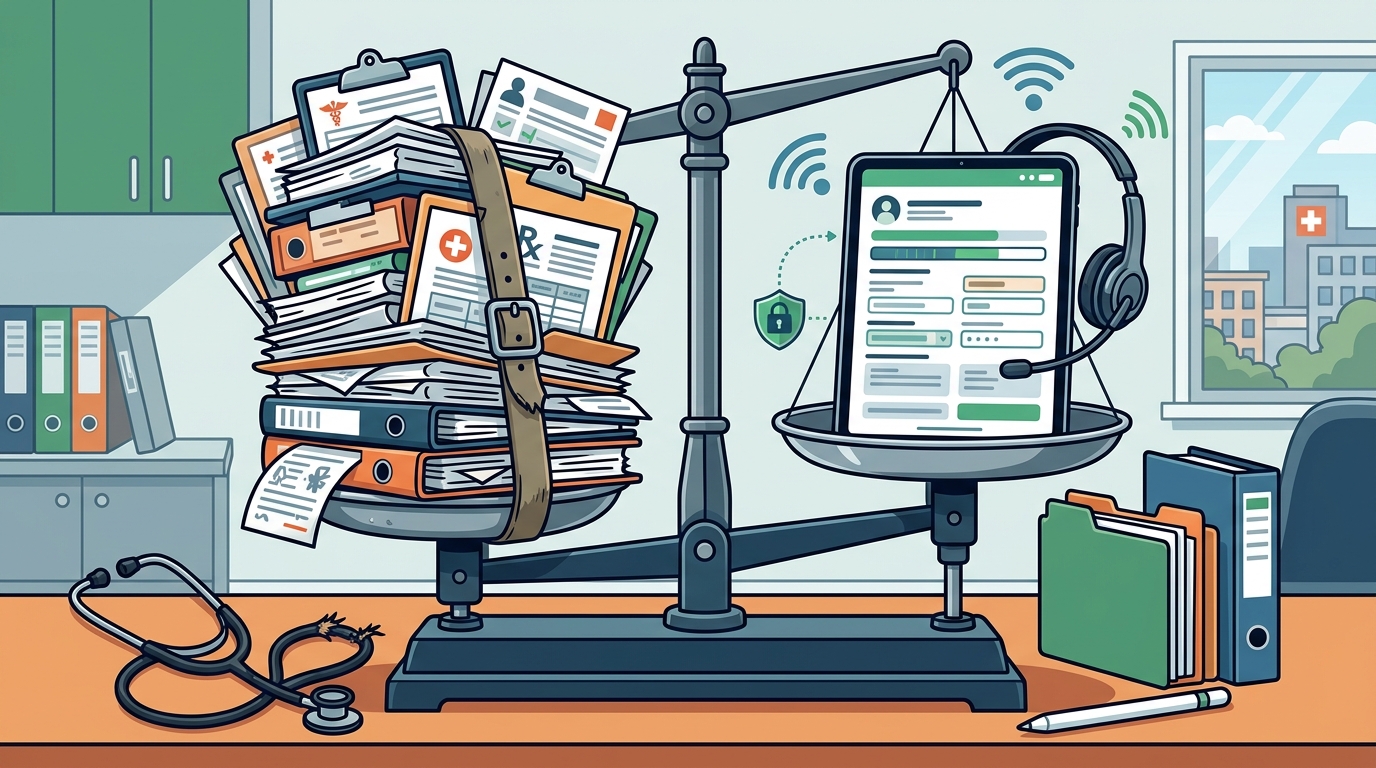
Physician burnout has reached critical levels in the modern healthcare landscape. Recent data indicates that 74.5% of physicians experiencing burnout cite Electronic Health Record (EHR) documentation as a major contributing factor. This overwhelming administrative burden forces doctors to spend more time staring at screens than looking at patients. The result is a healthcare system struggling with provider retention and patient satisfaction. Virtual medical scribes offer a proven, scalable solution to this crisis by handling real-time documentation, allowing physicians to reclaim their time and focus on clinical care. (Page not found My)
Understanding Physician Burnout and Documentation
Physician burnout is a syndrome conceptualized as resulting from chronic workplace stress that has not been successfully managed. It is characterized by three dimensions: feelings of energy depletion or exhaustion, increased mental distance from one's job, and reduced professional efficacy. In the context of modern medicine, the primary driver of this exhaustion is the sheer volume of data entry required during patient encounters.
According to the American Medical Association, physicians save an average of 66 minutes per 8-hour shift when using a medical scribe. This statistic highlights the massive inefficiency in current documentation workflows. Without assistance, doctors often work late into the evening to complete charts, leading to sleep deprivation and emotional fatigue. This cycle directly impacts patient safety and the quality of care provided. By delegating documentation tasks, physicians can restore work-life balance and reduce the cognitive load associated with EHR management.
The impact of burnout extends beyond the individual provider. It leads to higher turnover rates, increased healthcare costs, and decreased patient trust. Patients report that they have better interactions when their doctor is assisted by a scribe, with 57% of patients noting improved engagement. This suggests that the presence of a scribe not only helps the doctor but also enhances the overall patient experience. Addressing burnout is not just an HR issue; it is a clinical imperative.
How Virtual Scribes Operate in Real-Time
A virtual medical scribe is a trained professional who documents the patient encounter in real-time via a secure, HIPAA-compliant remote connection. Unlike traditional scribes who must be physically present in the exam room, virtual scribes work from off-site locations, providing flexibility and scalability for medical practices.
The process begins with the physician connecting to the scribe via a secure platform using a laptop or tablet during the appointment. The scribe can see and hear the interaction, allowing them to capture clinical details accurately. This real-time documentation ensures that the medical record is complete and accurate at the time of service, rather than being reconstructed from memory hours later.
Once the data is captured, the scribe processes it directly into the practice's Electronic Medical Record (EMR) or EHR system. This seamless integration ensures that the physician can focus on the patient without breaking eye contact or interrupting the flow of the conversation. The scribe acts as an extension of the medical team, handling the administrative burden while the doctor handles the clinical care.
This model is particularly effective for telehealth visits, where documentation can be equally challenging. Virtual scribes can join telehealth sessions just as easily as in-person visits, ensuring consistent documentation quality across all care modalities. The result is a streamlined workflow that reduces administrative fatigue and improves operational efficiency.
Key Benefits of Remote Scribe Services
Implementing a virtual scribe service offers multiple tangible benefits for medical practices. These advantages extend beyond simple time savings, impacting revenue, compliance, and staff morale.
Increased Revenue and Efficiency
By allowing physicians to see more patients per day, virtual scribes directly contribute to practice revenue. The ability to document accurately and quickly reduces the likelihood of claim denials due to incomplete information. Practices report significant increases in productivity when adopting scribe services, as the administrative bottleneck is removed from the clinical workflow.
Improved Patient Satisfaction
When physicians are not distracted by typing, they can maintain better eye contact and engage more deeply with their patients. This focused attention builds trust and improves the overall patient experience. Patients feel heard and valued, which leads to higher satisfaction scores and better adherence to treatment plans.
Enhanced Compliance and Accuracy
Virtual scribes are trained in medical terminology and coding guidelines, ensuring that documentation meets regulatory standards. This reduces the risk of compliance issues and audits. The real-time nature of the service also ensures that critical clinical details are not missed, leading to more accurate medical records.
EHR and EMR Integration Capabilities
One of the most critical factors in the success of a virtual scribe service is its ability to integrate with existing EHR and EMR systems. My Virtual Scribe (MVS) is trained to document directly within a wide range of popular platforms, ensuring a smooth transition for practices of all sizes.
Supported systems include OfficeAlly, eClinicalWorks, NextGen, DrChrono, PracticeFusion, Simple Practice, OncoEMR, WebPT, IMS EHR, and TriMed. This broad compatibility means that practices do not need to change their core technology stack to benefit from scribe services. The scribe works within the familiar interface of the physician, reducing the learning curve and increasing adoption rates.
The integration process is designed to be seamless. Scribes receive training on the specific workflows and templates used by the practice. This ensures that the documentation is not only accurate but also formatted in a way that is easy for the physician to review and sign. The result is a cohesive workflow that enhances rather than disrupts the clinical process.
Support Across Medical Specialties
Virtual scribe services are not limited to a single specialty. They are tailored to meet the unique documentation needs of various medical fields, including general practice, dermatology, dentistry, veterinary care, and optometry. Each specialty has its own terminology, coding requirements, and workflow nuances, which experienced scribes are trained to navigate.
For example, dermatologists require detailed descriptions of skin lesions and procedures, while dentists need precise records of dental work and patient history. Virtual scribes adapt to these specific requirements, ensuring that the documentation is relevant and useful for future care. This flexibility makes virtual scribes a valuable asset for multi-specialty practices and independent providers alike.
Additionally, MVS offers virtual assistant services beyond scribing, including administrative support, billing assistance, and marketing support. This holistic approach allows practices to address multiple operational challenges simultaneously, further reducing the burden on clinical staff.
Key Takeaways
- 74.5% of physicians cite EHR documentation as a major factor in burnout, highlighting the urgent need for documentation support.
- 66 minutes saved per shift is the average time physicians reclaim when using a medical scribe, according to the American Medical Association.
- 57% of patients report better interactions with their doctors when assisted by a scribe, indicating improved patient engagement.
- Real-time documentation ensures accuracy and compliance, reducing the risk of claim denials and audit issues.
- Broad EHR compatibility with platforms like eClinicalWorks, NextGen, and Simple Practice ensures seamless integration.
- Specialty-specific training allows scribes to handle the unique needs of dermatology, dentistry, veterinary, and other fields.
- HIPAA compliance is maintained through secure VPN connections and rigorous screening measures, ensuring patient data protection.
Frequently Asked Questions
How does a virtual scribe ensure HIPAA compliance?
Virtual scribes use secure, encrypted VPN connections to access patient data. They undergo rigorous background checks and training on HIPAA regulations to ensure that all patient information is handled securely and confidentially.
Can virtual scribes work with telehealth visits?
Yes, virtual scribes are fully equipped to document telehealth visits. They join the virtual appointment via a secure link and document the encounter in real-time, just as they would for an in-person visit.
What EHR systems do virtual scribes support?
Virtual scribes are trained to work with a wide range of EHR and EMR systems, including OfficeAlly, eClinicalWorks, NextGen, DrChrono, PracticeFusion, Simple Practice, OncoEMR, WebPT, IMS EHR, and TriMed.
How quickly can a practice start using a virtual scribe?
Practices can typically begin using a virtual scribe within a few days of signing up. The onboarding process includes training on the specific EHR system and workflow of the practice to ensure a smooth transition.
Do virtual scribes replace medical staff?
No, virtual scribes complement existing medical staff by handling documentation tasks. They allow physicians and administrative staff to focus on their core responsibilities, improving overall practice efficiency.
What specialties do virtual scribes support?
Virtual scribes support a variety of specialties, including general practice, dermatology, dentistry, veterinary care, and optometry. They are trained in the specific terminology and workflows of each field.
How does a virtual scribe improve patient satisfaction?
By allowing physicians to focus on the patient rather than the computer, virtual scribes enable better eye contact and engagement. This leads to improved patient interactions and higher satisfaction scores.
Is there a minimum contract length for virtual scribe services?
Contract terms vary, but many providers offer flexible options to suit the needs of the practice. It is best to contact the service provider directly to discuss specific contract terms and pricing.
Get Started with My Virtual Scribe
Reduce physician burnout and improve patient care by partnering with My Virtual Scribe. Our team of trained professionals is ready to help your practice streamline documentation and focus on what matters most. Book your FREE trial today and experience the difference that virtual scribing can make for your medical practice.