

Physician burnout has reached critical levels, with 74.5% of doctors citing electronic health record (EHR) documentation as a major factor in their exhaustion. This statistic, verified by PubMed, highlights an urgent need for efficient documentation solutions. While traditional in-person scribes have long been the standard, the healthcare industry is rapidly shifting toward remote models. Understanding the operational differences between these two approaches is essential for practice managers aiming to restore work-life balance and improve patient outcomes.
Core Operational Differences
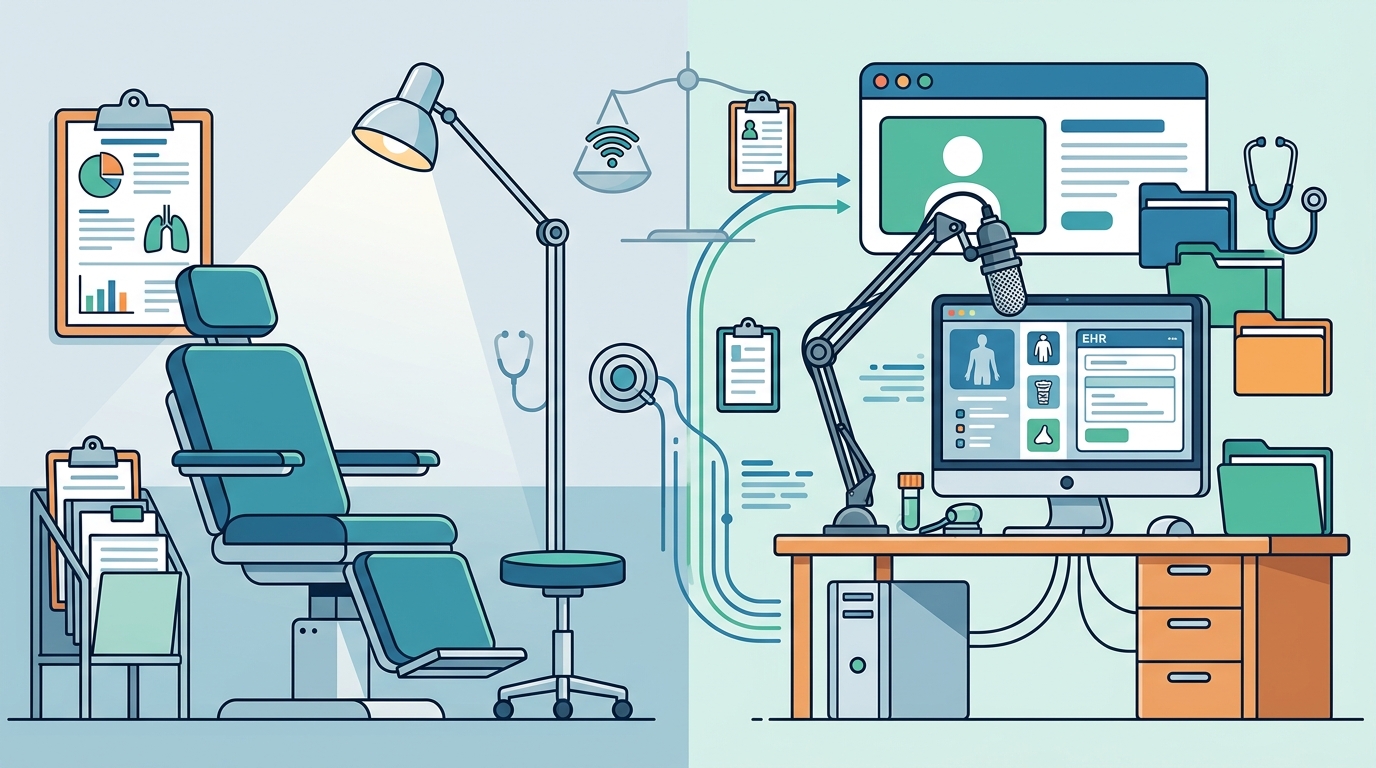
The fundamental distinction between in-person and remote medical scribes lies in their physical proximity to the clinical workflow. An in-person scribe sits in the exam room, observing the patient-physician interaction directly. This model allows for immediate clarification of ambiguous notes and real-time visual cues that might be missed over audio. However, it also requires significant logistical coordination, including scheduling, workspace management, and on-site supervision. (FAQs Get Answers About)
Remote medical scribes, by contrast, operate from a secure, off-site location. They rely on a secure audio feed and screen-sharing capabilities to document the visit in real-time. This model eliminates the need for physical workspace within the clinic, allowing physicians to maintain privacy without a third party in the room. According to the American Medical Association, remote scribes can save an average of 66 minutes per 8-hour shift, significantly reducing the administrative burden on clinicians. This efficiency is largely due to the streamlined onboarding process and the ability to scale staffing up or down without physical constraints.
My Virtual Scribe (MVS) specializes in this remote model, providing trained professionals who integrate seamlessly into your existing Electronic Medical Record (EMR) or EHR system. The remote approach is particularly effective for practices looking to reduce overhead costs associated with on-site staff, such as benefits, equipment, and office space allocation.
Cost and Pricing Models
When evaluating the financial impact of hiring a scribe, it is crucial to look beyond the hourly rate to the total cost of ownership. In-person scribes often command higher hourly wages due to the specialized nature of the work and the logistical costs of maintaining an on-site presence. Additionally, practices must account for the time spent recruiting, training, and managing these employees locally.
Remote scribe services typically offer a more predictable and scalable pricing structure. At My Virtual Scribe, the service is designed to be affordable, with rates starting at $10 per hour for qualified remote medical scribes. This competitive pricing model allows small practices and solo practitioners to access high-quality documentation support without the financial strain of full-time employment benefits. The remote model also reduces the risk of coverage gaps, as remote scribes can often work across different time zones or shift patterns more flexibly than local candidates.
Furthermore, the efficiency gains from remote scribing often translate to increased revenue. By freeing up physicians to see more patients or spend more time with each patient, the return on investment (ROI) for remote scribe services can be substantial. The reduction in administrative burnout also leads to lower turnover rates among medical staff, saving practices significant recruitment and training costs over time.
Security and HIPAA Compliance
Data security is the primary concern when adopting any remote technology in healthcare. Both in-person and remote scribes must adhere to strict HIPAA regulations, but the methods of enforcement differ. In-person scribes are physically present in the clinic, where security measures are controlled by the practice owner. Remote scribes, however, require robust digital infrastructure to ensure patient data remains protected.
My Virtual Scribe addresses these concerns by implementing comprehensive security protocols. Our platform utilizes VPN-powered workspace security to encrypt all data transmissions. This ensures that patient information is never exposed to unauthorized parties during the documentation process. Additionally, our scribes undergo rigorous training on HIPAA compliance and data privacy best practices.
For practices concerned about the security of remote scribing, it is important to verify the vendor's security certifications and data handling policies. MVS provides a secure, compliant environment that meets or exceeds industry standards, allowing physicians to focus on patient care without worrying about data breaches. The use of secure, encrypted connections ensures that the remote scribe can access the necessary EMR systems without compromising patient confidentiality.
Specialty-Specific Suitability
Not all medical specialties benefit equally from remote scribing. The effectiveness of a remote scribe depends on the complexity of the documentation and the need for visual cues. For example, dermatology and optometry often require detailed visual documentation that might be challenging to capture remotely without high-quality video feeds. However, even in these specialties, remote scribes can be highly effective when equipped with the right technology.
Primary care, internal medicine, and neurology are particularly well-suited for remote scribing. These specialties involve extensive narrative documentation and complex patient histories, which remote scribes can capture accurately through audio and screen sharing. My Virtual Scribe offers specialized scribes for various fields, including dermatology, dental, and oncology practices, ensuring that the scribe's expertise aligns with the specific needs of the specialty.
For veterinary practices, remote scribing is also gaining traction. Veterinarians often struggle with detailed medical records for animal patients, and remote scribes can help streamline this process. The flexibility of remote scribes allows them to work with veterinary clinics across different regions, providing consistent support regardless of geographic location.
Key Takeaways
- Burnout Reduction: 74.5% of physicians cite EHR documentation as a major factor in burnout, making scribe services critical for mental health.
- Time Savings: Remote scribes save an average of 66 minutes per 8-hour shift, according to the American Medical Association.
- Patient Satisfaction: 57% of patients report better interactions when their doctor is assisted by a scribe, enhancing the overall care experience.
- Cost Efficiency: Remote scribe services like MVS offer competitive rates starting at $10 per hour, reducing overhead for small practices.
- Security: MVS uses VPN-powered workspace security to ensure HIPAA compliance and protect patient data.
- Specialty Support: Remote scribes are available for diverse specialties, including dermatology, dental, oncology, and veterinary practices.
- Founder Expertise: MVS was founded by Dr. Behzad Ourmazdi, a neurologist with over 20 years of experience, ensuring deep industry understanding.
Frequently Asked Questions
How does remote scribing ensure HIPAA compliance?
Remote scribes use encrypted VPN connections and secure, compliant platforms to access EMR systems. All data transmissions are protected, and scribes undergo rigorous HIPAA training to ensure patient confidentiality.
Can remote scribes handle complex specialties like dermatology?
Yes, remote scribes can be trained for specific specialties, including dermatology, oncology, and dental practices. They use audio and screen-sharing tools to capture detailed documentation accurately.
What is the cost of hiring a remote medical scribe?
My Virtual Scribe offers affordable rates starting at $10 per hour. This pricing model is designed to be accessible for small practices and solo practitioners while providing high-quality service.
How do remote scribes impact patient privacy?
Remote scribes allow the physician and patient to be alone in the exam room, enhancing privacy. The scribe listens remotely via secure audio feeds, eliminating the presence of a third party in the room.
What are the benefits of remote scribes over in-person scribes?
Remote scribes offer greater flexibility, lower costs, and easier scalability. They eliminate the need for on-site workspace and allow practices to access talent from a wider pool, reducing staffing challenges.
How quickly can I start using a remote scribe?
My Virtual Scribe provides a streamlined onboarding process. Once you connect with our team, trained scribes can begin working immediately, processing data into your EMR or EHR system with minimal setup time.
Does My Virtual Scribe offer support for veterinary practices?
Yes, MVS provides virtual medical scribe services for veterinary practices, helping veterinarians manage detailed medical records and improve workflow efficiency.
Conclusion
The choice between in-person and remote medical scribes depends on your practice's specific needs, budget, and technological readiness. Remote scribing offers significant advantages in terms of cost, flexibility, and scalability, while maintaining high standards of security and compliance. By partnering with My Virtual Scribe, you can reclaim your time, reduce burnout, and focus on what matters most: your patients.
Ready to transform your practice? Contact My Virtual Scribe today to schedule a consultation and discover how our remote medical scribe services can benefit your healthcare facility.