

Top Mistakes Small Practices Make When Hiring Remote Medical Scribes
Small practices often fail to vet scribe credentials, ignore HIPAA compliance, and lack clear communication protocols. These errors lead to documentation errors and workflow friction. My Virtual Scribe helps practices avoid these pitfalls by providing vetted, trained remote scribes who integrate seamlessly into existing EHR systems. For additional details, review the myvirtualscribe us.
The Danger of Skipping Credential Verification
Many small practices assume that any remote worker can handle medical documentation. This assumption is dangerous. Medical scribe credentialing is the process of verifying a scribe's training, background, and competency in clinical documentation. Without rigorous vetting, practices risk hiring individuals who lack the specific EHR experience or medical terminology knowledge required for accurate charting. This leads to incomplete notes and increased physician burnout from having to correct errors.
Ignoring EHR Compatibility and Workflow Fit
A common mistake is hiring scribes who are not proficient in the practice's specific Electronic Health Record (EHR) platform. EHR integration is the technical and procedural alignment between a scribe's documentation workflow and the practice's software environment. If a scribe is unfamiliar with the specific templates, order sets, or coding structures of a practice's EHR, they will slow down the documentation process rather than speed it up. This mismatch creates a bottleneck where physicians must wait for scribes to navigate unfamiliar interfaces.
For example, a cardiology practice using a specialized EHR module for echocardiograms requires scribes who understand the specific data fields for wall motion scoring. A generalist scribe may struggle with this, leading to delayed note finalization. My Virtual Scribe matches scribes based on their demonstrated proficiency in the specific EHR platforms used by the practice. This ensures that documentation flows smoothly without requiring extensive on-the-job training for the scribe.
Overlooking HIPAA Compliance and Security Protocols
Small practices often underestimate the security risks associated with remote documentation. HIPAA compliance is the adherence to federal regulations that protect the privacy and security of patient health information. When hiring remote scribes, practices must ensure that their vendors use secure, encrypted channels for data transmission and that scribes sign Business Associate Agreements (BAAs). Failure to enforce these protocols exposes the practice to significant legal and financial liability in the event of a data breach.
My Virtual Scribe operates with strict HIPAA-compliant infrastructure. All scribes work in secure environments that meet federal privacy standards. The company ensures that data is encrypted in transit and at rest, and that access is strictly controlled. By partnering with a compliant vendor, small practices can offload documentation tasks without compromising patient privacy. This security posture is non-negotiable for any healthcare organization handling sensitive patient data.
Failing to Establish Clear Communication Channels
Remote work requires intentional communication structures. Many practices fail to define how scribes should interact with physicians and other staff. Communication protocol design is the creation of standardized methods for exchanging information between remote team members and on-site staff. Without clear channels, scribes may hesitate to ask clarifying questions, leading to guesswork in documentation. Alternatively, they may interrupt physicians at inopportune times, disrupting patient care.
Effective remote scribe teams use dedicated communication tools that allow for quick, asynchronous updates. For instance, a scribe might flag a missing lab result in a shared dashboard rather than calling the physician directly. My Virtual Scribe trains its scribes in best practices for remote communication, ensuring they know when to escalate issues and how to document clarifications. This structured approach minimizes interruptions and maintains the flow of clinical care.
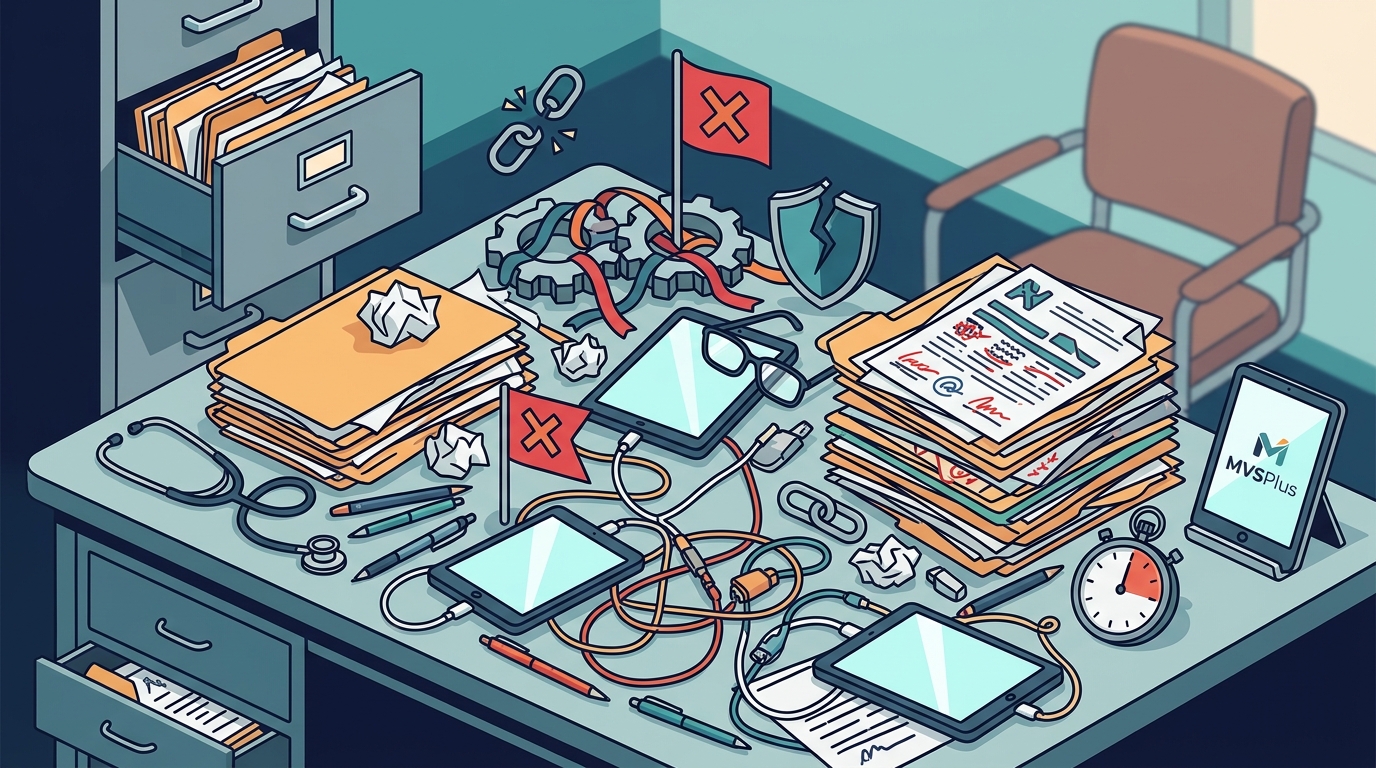
Neglecting Performance Monitoring and Feedback Loops
Hiring a scribe is not a set-it-and-forget-it task. Practices often fail to track the quality and speed of documentation. Performance monitoring is the ongoing assessment of scribe output against predefined quality and efficiency benchmarks. Without regular feedback, documentation errors can persist unnoticed, and workflow inefficiencies can compound over time. This lack of oversight erodes the value of the scribe investment.
My Virtual Scribe provides regular performance reports that track metrics such as note completion time, error rates, and physician satisfaction. These insights allow practices to identify areas for improvement and provide targeted feedback to their scribes. By establishing a continuous feedback loop, practices ensure that their remote documentation partners remain aligned with their evolving needs. This proactive management is key to long-term success in remote scribe partnerships.
Key Takeaways
- Always verify scribe credentials, including EHR proficiency and medical terminology training.
- Ensure scribes are proficient in your specific EHR platform to avoid workflow bottlenecks.
- Maintain strict HIPAA compliance by using secure, encrypted communication channels and BAAs.
- Establish clear communication protocols to minimize interruptions and clarify documentation needs.
- Implement regular performance monitoring and feedback loops to maintain documentation quality.
- Partner with a vetted provider like My Virtual Scribe to mitigate hiring risks.
Frequently Asked Questions
How do I verify if a remote scribe is HIPAA compliant?
Request a copy of their Business Associate Agreement (BAA) and verify their use of encrypted, secure platforms for data transmission. My Virtual Scribe provides full HIPAA compliance documentation for all its scribes.
What EHR experience should I look for in a remote scribe?
Look for scribes with demonstrated proficiency in your specific EHR platform, including familiarity with your practice's templates and order sets. My Virtual Scribe matches scribes based on their EHR expertise.
Can remote scribes handle specialty-specific documentation?
How often should I review my scribe's performance?
Review performance metrics monthly to identify trends and provide feedback. My Virtual Scribe provides regular performance reports to support this process.
What is the biggest risk of hiring an unvetted remote scribe?
The biggest risk is documentation errors that lead to coding issues, billing denials, or potential patient safety concerns. Rigorous vetting mitigates these risks. Learn more: myvirtualscribe us.