

7 Top Mistakes Small Practices Make When Implementing Remote Scribe Services
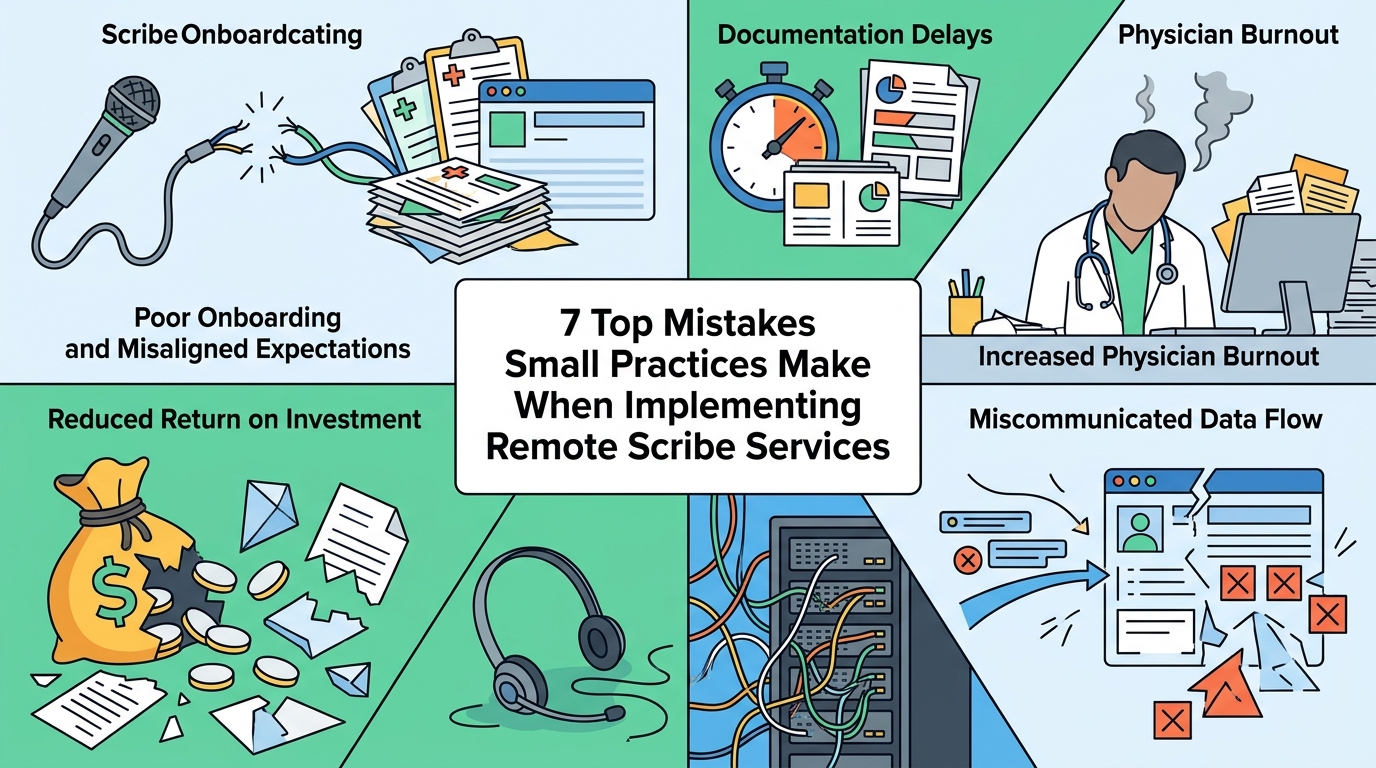
Small healthcare practices often struggle to integrate remote scribe services effectively due to misaligned expectations and poor onboarding. These errors can lead to documentation delays, increased physician burnout, and reduced return on investment. By identifying and correcting these common pitfalls, practices can maximize the benefits of remote documentation support. For additional details, review the myvirtualscribe us.
Mistake 1: Ignoring EHR Compatibility
Mistake 2: Skipping Physician Training
Provide comprehensive training for physicians on how to collaborate with remote scribes. Physicians often feel uncomfortable delegating documentation tasks to a remote party. Without proper training, they may hesitate to use the service or provide unclear verbal instructions. Training sessions should cover how to initiate sessions, how to review notes, and how to give feedback to the scribe.
Mistake 3: Failing to Define Documentation Standards
Establish clear, written guidelines for the type and quality of documentation expected. Ambiguity in documentation standards leads to inconsistent notes and potential compliance issues. Define what constitutes a complete note, including required sections, coding preferences, and narrative style. These standards should be shared with both the physicians and the scribe team.
Mistake 4: Underestimating the Importance of HIPAA Compliance
Mistake 5: Choosing Scribes Without Medical Backgrounds
Select a provider that employs scribes with relevant medical or healthcare training. Scribes without medical knowledge may struggle to understand clinical terminology, leading to inaccurate documentation. Look for providers that vet and train their scribes in medical terminology, coding basics, and clinical workflows. This ensures higher quality notes and fewer corrections needed by physicians.
Mistake 6: Lack of Clear Communication Protocols
Implement structured communication channels between physicians and remote scribes. Poor communication leads to misunderstandings and documentation errors. Define how and when physicians will communicate with scribes, including preferred methods (e.g., secure chat, phone) and response time expectations. Regular check-ins can help maintain alignment and address any issues promptly.
Mistake 7: Not Measuring Performance Metrics
Track key performance indicators (KPIs) to evaluate the effectiveness of the remote scribe service. Without measurement, it is difficult to determine if the service is delivering value. Monitor metrics such as documentation time saved, error rates, physician satisfaction, and cost per note. Use this data to make informed decisions about continuing, adjusting, or changing the service.
Frequently Asked Questions
How long does it take to implement a remote scribe service?
Can remote scribes work with any EHR system?
No, remote scribes must be compatible with your specific EHR system. It is crucial to verify compatibility before selecting a provider to avoid integration issues.
Are remote scribes HIPAA compliant?
Reputable remote scribe providers are HIPAA compliant. They use encrypted communication and secure data storage, and they sign Business Associate Agreements (BAAs) with practices. Learn more: myvirtualscribe us.