

Integrating Remote Scribes Into Your Existing EHR Workflow
Physician burnout has reached critical levels, with 74.5% of doctors citing EHR documentation as a major factor in their stress. This statistic is not just a number; it is a daily reality for clinicians who spend more time staring at screens than looking at patients. According to the American Medical Association, using a medical scribe saves an average of 66 minutes per 8-hour shift. This data shows that the integration of remote scribes is not merely a convenience but a vital operational necessity for modern healthcare practices. (About My Virtual Scribe)
Integrating a remote medical scribe into your existing Electronic Health Record (EHR) workflow requires more than just hiring a virtual assistant. It demands a structured approach to technology setup, security compliance, and clinical communication. This guide outlines the precise steps to ensure your practice transitions smoothly to a remote documentation model without disrupting patient care. (FAQs Get Answers About)
Understanding the Remote Scribe Model
A remote medical scribe is a trained professional who documents patient encounters in real-time from a secure, off-site location. Unlike traditional in-person scribes, remote scribes rely entirely on digital audio and video feeds to capture clinical data. This model allows healthcare providers to access specialized documentation support regardless of geographic location. (Hiring a Virtual Assistant)
The core value proposition lies in the separation of clinical observation from data entry. My Virtual Scribe (MVS) operates on this principle, providing trained staff who listen to the patient-physician interaction and input data directly into your practice's EMR or EHR system. This approach rehumanizes the healthcare experience by allowing the physician to maintain eye contact and engagement with the patient, rather than turning their back to type notes.
For practices struggling with the rigorous demands of electronic documentation, this model offers a scalable solution. It eliminates the overhead of hiring, training, and managing in-house scribe staff while providing consistent, high-quality documentation support. The goal is to restore the physician-patient connection that has been eroded by administrative burdens.
Technical Infrastructure and Security
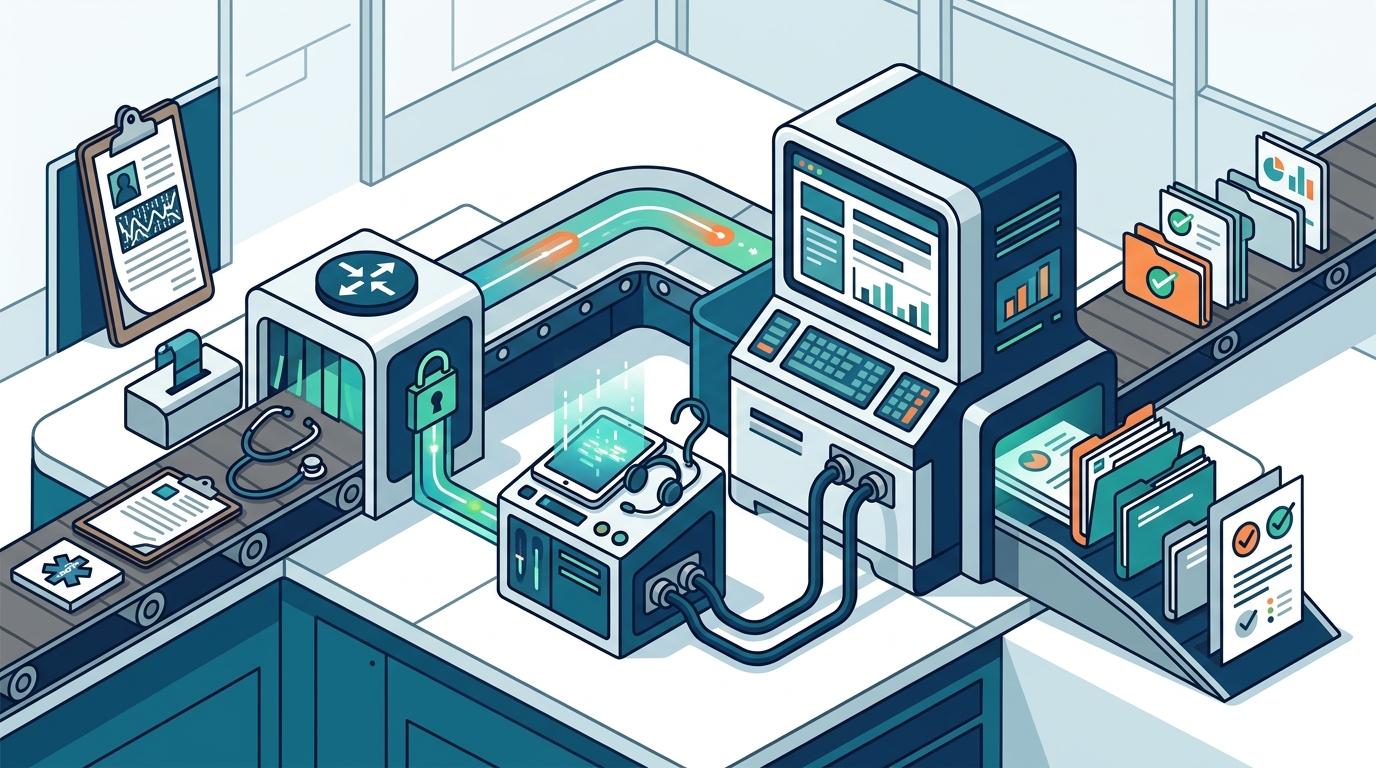
Successful integration begins with a robust technical foundation. Remote scribes require a stable, high-bandwidth internet connection and secure hardware to function effectively. The infrastructure must support real-time audio and video transmission with minimal latency to ensure the scribe captures every detail of the consultation.
Security is the paramount concern when dealing with Protected Health Information (PHI). All remote scribe services must adhere to strict HIPAA compliance standards. This includes the use of encrypted data channels, secure login protocols, and regular security audits. According to recent industry reports, practices that implement comprehensive workspace security powered by Virtual Private Networks (VPNs) significantly reduce the risk of data breaches. (How Regulations Compliance)
When selecting a remote scribe provider, verify their technical capabilities. Ensure they offer dedicated support for hardware setup and troubleshooting. A reliable provider will guide you through the installation of necessary software and configure your devices to meet their security requirements. This proactive approach minimizes downtime and ensures that your practice is ready to handle remote documentation from day one.
EHR Integration Protocols
The heart of the remote scribe service is its ability to interface seamlessly with your existing EHR system. Whether you use Epic, Cerner, Allscripts, or a specialized practice management software, the remote scribe must be able to navigate your specific interface efficiently.
Integration typically involves the following steps:
- Access Provisioning: Grant the remote scribe secure, role-based access to your EHR system. This access is usually limited to the documentation module to protect sensitive patient data.
- Template Customization: Work with your scribe to customize note templates that match your specialty. For example, a dermatologist requires different fields than a neurologist. Custom templates ensure that the documentation is relevant and reduces the time spent on data entry.
- Real-Time Syncing: Ensure that the scribe's input is synced in real-time with your EHR. This allows you to review notes as they are being written and make corrections if necessary before finalizing the encounter.
My Virtual Scribe specializes in integrating with a wide range of EHR systems. Their team of trained medical scribes is adept at navigating complex interfaces, ensuring that your workflow remains uninterrupted. By leveraging their expertise, you can avoid the common pitfalls of poor EHR integration, such as delayed documentation or data entry errors.
Clinical Workflow Alignment
Technical setup is only half the battle. You must also align your clinical workflow with the remote scribe's operations. This involves defining clear protocols for patient consent, scribe presence, and note review.
First, establish a protocol for patient consent. Inform your patients that a remote scribe will be present to assist with documentation. This transparency builds trust and ensures compliance with privacy regulations. Many patients appreciate the increased attention they receive from their physician, which can lead to better patient outcomes.
Next, define the scribe's role during the encounter. The scribe should be invisible to the patient, focusing solely on documentation. They should not provide medical advice or interact with the patient unless explicitly instructed to do so by the physician. This boundary is crucial for maintaining the integrity of the clinical relationship.
Finally, implement a note review process. While the remote scribe aims for accuracy, the physician remains responsible for the final note. Schedule brief intervals during your day to review and sign off on notes. This practice ensures that the documentation is accurate and timely, reducing the risk of billing delays or compliance issues.
Compliance and Data Protection
HIPAA compliance is non-negotiable in the healthcare industry. Remote scribe services must implement rigorous data protection measures to safeguard patient information. This includes encryption of data in transit and at rest, secure storage protocols, and regular employee training on privacy practices. (How Regulations Compliance)
According to the American Medical Association, practices that utilize compliant remote scribe services see a significant reduction in administrative errors. This is because trained scribes are less prone to the fatigue and distractions that often lead to mistakes in manual documentation. Furthermore, the use of standardized templates and protocols ensures consistency in note quality.
My Virtual Scribe prioritizes HIPAA compliance in all its operations. Their team undergoes regular training on privacy regulations and security best practices. Additionally, they provide Workspace Security powered by VPNs to ensure that all data transmissions are encrypted and secure. This commitment to compliance gives physicians peace of mind, allowing them to focus on patient care without worrying about data breaches.
Optimizing for Efficiency
Once your remote scribe is integrated, focus on optimizing the workflow for maximum efficiency. This involves continuous feedback and adjustment to ensure that the scribe's documentation meets your practice's needs.
Regular communication with your remote scribe is essential. Schedule weekly check-ins to discuss any challenges, update templates, or address new clinical requirements. This collaborative approach ensures that the scribe remains aligned with your practice's evolving needs.
Additionally, leverage data analytics to monitor the impact of the remote scribe on your practice. Track metrics such as note completion time, patient satisfaction scores, and physician burnout levels. These insights can help you identify areas for improvement and demonstrate the value of the remote scribe service to your team.
By optimizing your workflow, you can maximize the benefits of remote scribing. This includes increased revenue through higher patient volume, improved job satisfaction for your physicians, and enhanced patient care. The integration of a remote scribe is an investment in the future of your practice, one that pays dividends in both clinical and operational outcomes.
Key Takeaways
- Burnout Reduction: 74.5% of physicians cite EHR documentation as a major factor in burnout, highlighting the urgent need for remote scribe solutions.
- Time Savings: The American Medical Association reports that scribes save an average of 66 minutes per 8-hour shift, allowing more time for patient care.
- Patient Satisfaction: 57% of patients report better interactions when their doctor is assisted by a scribe, as the physician can maintain eye contact.
- Founder Expertise: My Virtual Scribe was founded by Dr. Behzad Ourmazdi, a neurologist practicing since 2002, who understands the clinical challenges firsthand.
- Specialty Support: MVS provides tailored scribe services for dermatology, optometry, oncology, and dental practices, ensuring specialized documentation accuracy.
- Security Standards: All remote scribe services must adhere to HIPAA compliance, with MVS providing additional Workspace Security powered by VPNs.
- Operational Flexibility: Remote scribes can be accessed via laptop or tablet, allowing for seamless integration into various clinical environments.
Frequently Asked Questions
How does a remote scribe access my EHR system?
A remote scribe accesses your EHR system through secure, role-based login credentials. They are granted limited access to the documentation module, ensuring that they can input notes without compromising sensitive patient data. The connection is encrypted via VPN to maintain HIPAA compliance.
Is HIPAA compliance guaranteed with remote scribe services?
Yes, reputable remote scribe services like My Virtual Scribe strictly adhere to HIPAA regulations. This includes secure data transmission, encrypted storage, and regular employee training on privacy practices. They also implement additional security measures such as Workspace Security powered by VPNs.
Can remote scribes handle specialized medical documentation?
Absolutely. Remote scribes are trained in various medical specialties, including dermatology, optometry, oncology, and dental care. They use customized templates and protocols to ensure that the documentation meets the specific requirements of each specialty.
How do I ensure patient privacy during a remote scribe session?
Patient privacy is maintained through informed consent and secure technical infrastructure. Patients are informed that a remote scribe is present, and all data transmissions are encrypted. The scribe remains invisible to the patient, focusing solely on documentation.
What is the cost of hiring a remote medical scribe?
The cost varies depending on the service provider and the level of support required. My Virtual Scribe offers competitive pricing models designed to be affordable for small practices and solo physicians. Contact them for a detailed quote based on your specific needs.
How long does it take to integrate a remote scribe?
Integration typically takes a few days to a week, depending on the complexity of your EHR system and the number of providers involved. My Virtual Scribe provides dedicated support to guide you through the setup process, ensuring a smooth transition.
Can remote scribes improve patient outcomes?
Yes, by allowing physicians to focus more on patient interaction and less on documentation, remote scribes can contribute to better patient outcomes. Studies show that patients feel more heard and respected when their doctor is not distracted by screen time.
Ready to Transform Your Practice?
Integrating a remote scribe is a strategic move to combat burnout and enhance patient care. My Virtual Scribe offers the expertise, technology, and support you need to make this transition seamless. Visit our pricing page to explore our affordable plans or contact us today to schedule a consultation. Take the first step toward a more efficient, patient-centered practice.