

Physician burnout has reached critical levels, with 74.5% of doctors citing EHR documentation as a major factor in their stress. This statistic, verified by PubMed, highlights an urgent industry-wide crisis that demands immediate operational solutions. Healthcare facilities are no longer asking if they need scribe support, but rather which delivery model best serves their specific practice architecture. The choice between traditional in-person scribes and modern remote virtual scribes fundamentally alters practice economics, compliance overhead, and patient interaction quality. (About My Virtual Scribe)
Understanding the Core Models
The medical scribe industry has bifurcated into two distinct operational paradigms. Each serves different practice sizes, technological maturity levels, and budget constraints. Understanding the mechanical differences is the first step toward optimizing your workflow. (FAQs Get Answers About)
Traditional In-Person Scribes
An in-person scribe is a dedicated individual physically present in the exam room. They observe the patient-physician interaction in real-time and document the encounter directly into the Electronic Health Record (EHR) system. This model relies on physical proximity to capture nuanced non-verbal cues and immediate context. However, it requires significant logistical coordination, including scheduling, physical workspace allocation, and local hiring processes.
Remote Virtual Scribes
A remote medical scribe operates from a secure, off-site location. Using secure audio and video feeds, the virtual scribe listens to the consultation and documents the visit in real-time. This model decouples documentation from physical location, allowing practices to access talent regardless of geographic constraints. The technology stack required for this model includes secure VPNs, HIPAA-compliant audio transmission, and seamless EHR integration.
Cost Analysis and Pricing Structures
Financial viability is often the primary driver for practice managers evaluating scribe services. The cost structures differ significantly between the two models due to overhead, benefits, and infrastructure requirements.
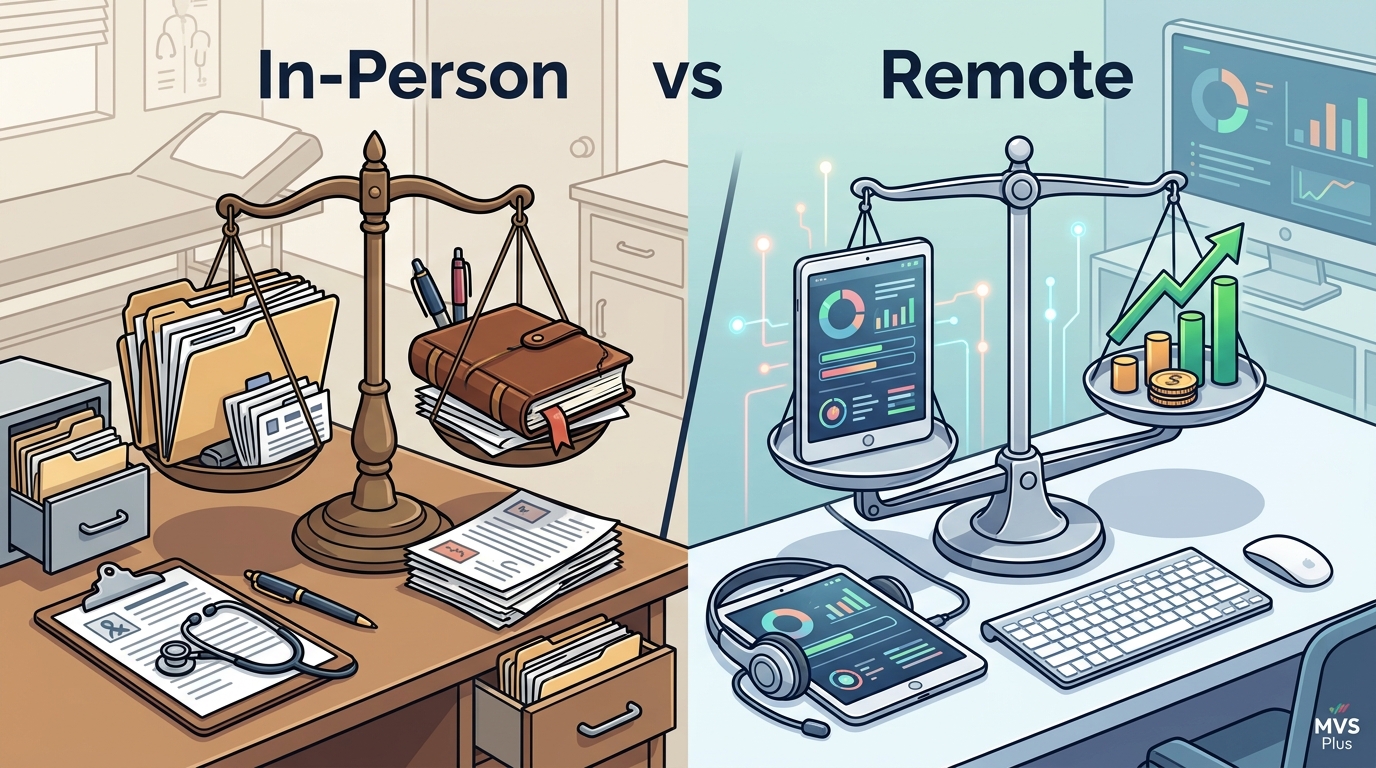
Direct Costs and Overhead
In-person scribes typically command higher hourly rates or salary packages. This is due to the need for local market wages, payroll taxes, workers' compensation, and benefits. Furthermore, practices must absorb the cost of physical workspace, equipment, and administrative time spent managing on-site staff. According to data from the American Medical Association, in-person scribes can save approximately 66 minutes per 8-hour shift, but the return on investment is heavily dependent on the practice's ability to bill for the additional time generated.
Virtual Scribe Economics
Remote scribe services often operate on a more streamlined pricing model. Because the provider manages the employment, benefits, and infrastructure, the practice pays for the service rather than the employee. For example, My Virtual Scribe offers competitive rates starting at $10 per hour for qualified virtual scribes. This model eliminates the hidden costs of HR management and physical office space. The predictability of monthly billing allows for easier budget forecasting and immediate cost savings compared to the variable expenses of in-person staffing.
Compliance and Data Security
Healthcare data security is non-negotiable. Both models must adhere to HIPAA regulations, but the risk profiles and mitigation strategies differ.
In-Person Security Risks
In-person scribes have physical access to patient records, workstations, and potentially sensitive physical documents. The risk of data leakage through physical means, such as unsecured screens or printed notes, is higher. Practices must invest in physical security measures, including locked cabinets, privacy screens, and strict access control logs.
Remote Security Infrastructure
Remote scribes rely on digital security protocols. Leading providers like My Virtual Scribe implement Workspace Security powered by VPNs to ensure encrypted data transmission. The scribe's home office environment is audited for compliance, ensuring no unauthorized individuals can access the patient data. This centralized security approach often provides a more robust defense against data breaches than scattered in-person locations. The digital audit trail is also more comprehensive, allowing for easier monitoring of scribe activity and documentation accuracy.
Impact on Patient Experience
The ultimate goal of any medical practice is patient care. The presence of a scribe, whether physical or virtual, impacts the patient-physician dynamic differently.
The In-Person Dynamic
Patients can see the scribe in the room. For some, this provides reassurance that their history is being captured accurately. For others, it can feel intrusive or reduce the sense of privacy. The physical presence of a third party can sometimes inhibit open communication, particularly in sensitive specialties like dermatology or oncology.
The Virtual Advantage
Remote scribes offer a unique advantage in patient comfort. Because the scribe is not physically in the room, the patient feels they have the doctor's undivided attention. This perception is critical for trust-building. 57% of patients report better interactions when their doctor is assisted by a scribe, according to the American Medical Association. This statistic holds true for virtual scribes as well, often with an added benefit of reduced physical clutter in the exam room. The doctor can maintain eye contact and focus entirely on the patient, knowing the documentation is being handled seamlessly in the background.
Scalability and Operational Flexibility
Practice growth requires operational agility. The ability to scale scribe support up or down based on patient volume is a key differentiator.
Scaling In-Person Staffing
Hiring in-person scribes is a slow process. It involves job postings, interviews, background checks, and onboarding. If a practice needs to expand to multiple locations or cover unexpected absences, the logistical burden is high. Turnover in the scribe industry is also significant, leading to constant recruitment cycles that disrupt practice workflow.
Virtual Scalability
Remote scribe services offer immediate scalability. A practice can request additional scribe hours or switch providers with minimal notice. This flexibility is crucial for seasonal fluctuations or rapid practice expansion. Virtual scribes can be deployed across different time zones, ensuring coverage for extended hours or urgent care needs. This operational flexibility allows practice managers to focus on patient care rather than HR logistics.
Key Takeaways
- Burnout Reduction: 74.5% of physicians cite EHR documentation as a major factor in burnout, making scribe support essential for mental health.
- Time Savings: In-person scribes save an average of 66 minutes per 8-hour shift, a metric that translates directly to increased patient throughput.
- Patient Satisfaction: 57% of patients report better interactions with scribe-assisted doctors, a trend that extends to virtual models due to increased privacy.
- Cost Efficiency: Virtual scribes eliminate overhead costs like workspace and benefits, with providers like My Virtual Scribe offering rates starting at $10/hour.
- Security: Remote scribes utilize VPN-secured workspaces, often providing a more auditable and secure environment than scattered in-person locations.
- Scalability: Virtual models allow for immediate scaling of staff hours without the delays associated with local hiring.
- Founder Insight: Dr. Behzad Ourmazdi, founder of My Virtual Scribe, emphasizes that virtual assistants restore the joy of practicing medicine by removing administrative burdens.
Frequently Asked Questions
Are remote medical scribes HIPAA compliant?
Yes, reputable remote scribe services like My Virtual Scribe use encrypted VPNs and secure workspaces to ensure full HIPAA compliance. All data transmission is protected, and scribes undergo rigorous background checks.
How much do remote medical scribes cost compared to in-person?
Remote scribes are generally more cost-effective. While in-person scribes require salaries, benefits, and workspace costs, remote services often charge a flat hourly rate. My Virtual Scribe, for instance, offers rates starting at $10 per hour, significantly reducing overhead.
Can virtual scribes handle complex specialties like dermatology?
Absolutely. Virtual scribes are trained in various specialties, including dermatology, optometry, and oncology. They use secure audio feeds to capture detailed clinical notes without needing physical presence.
What is the impact of scribes on physician burnout?
Scribes directly reduce burnout by handling documentation. With 74.5% of physicians citing EHR work as a stressor, offloading this task allows doctors to focus on patient care, improving job satisfaction.
How do I integrate a virtual scribe with my existing EHR?
Most virtual scribe services integrate with major EHR systems. The scribe accesses your EHR securely via their platform, ensuring real-time documentation without disrupting your current workflow.
Do patients prefer in-person or virtual scribes?
Many patients prefer virtual scribes because they do not feel the presence of a third party in the exam room. This enhances privacy and allows for more direct eye contact with the physician.
Is training required for virtual scribes?
Yes, professional virtual scribes undergo extensive training in medical terminology, EHR navigation, and specialty-specific protocols. Providers like My Virtual Scribe ensure their staff is fully prepared to support your practice.
Choose Your Path to Efficiency
The decision between in-person and remote medical scribes depends on your practice's specific needs. However, the trend toward virtual solutions is driven by undeniable advantages in cost, scalability, and patient comfort. By choosing a remote model, you align with the future of healthcare delivery. Contact My Virtual Scribe today to schedule a consultation and discover how our virtual scribes can transform your practice.