

Physician burnout has reached a critical tipping point in the modern healthcare landscape. According to recent data from the American Medical Association, 66 minutes are saved per 8-hour shift when using a medical scribe, directly translating to more time for patient interaction. This statistic highlights the urgent need for efficient documentation solutions that go beyond simple data entry. As we move through 2026, healthcare providers are no longer choosing between doing nothing and doing it all themselves. Instead, they are weighing the nuanced differences between human-led remote scribing and automated artificial intelligence tools. Both options promise to reduce administrative burden, but they achieve this goal through fundamentally different mechanisms. Understanding these distinctions is vital for practice owners who want to optimize their workflow without compromising patient care quality. (About My Virtual Scribe)
Human Virtual Scribes vs. AI Documentation
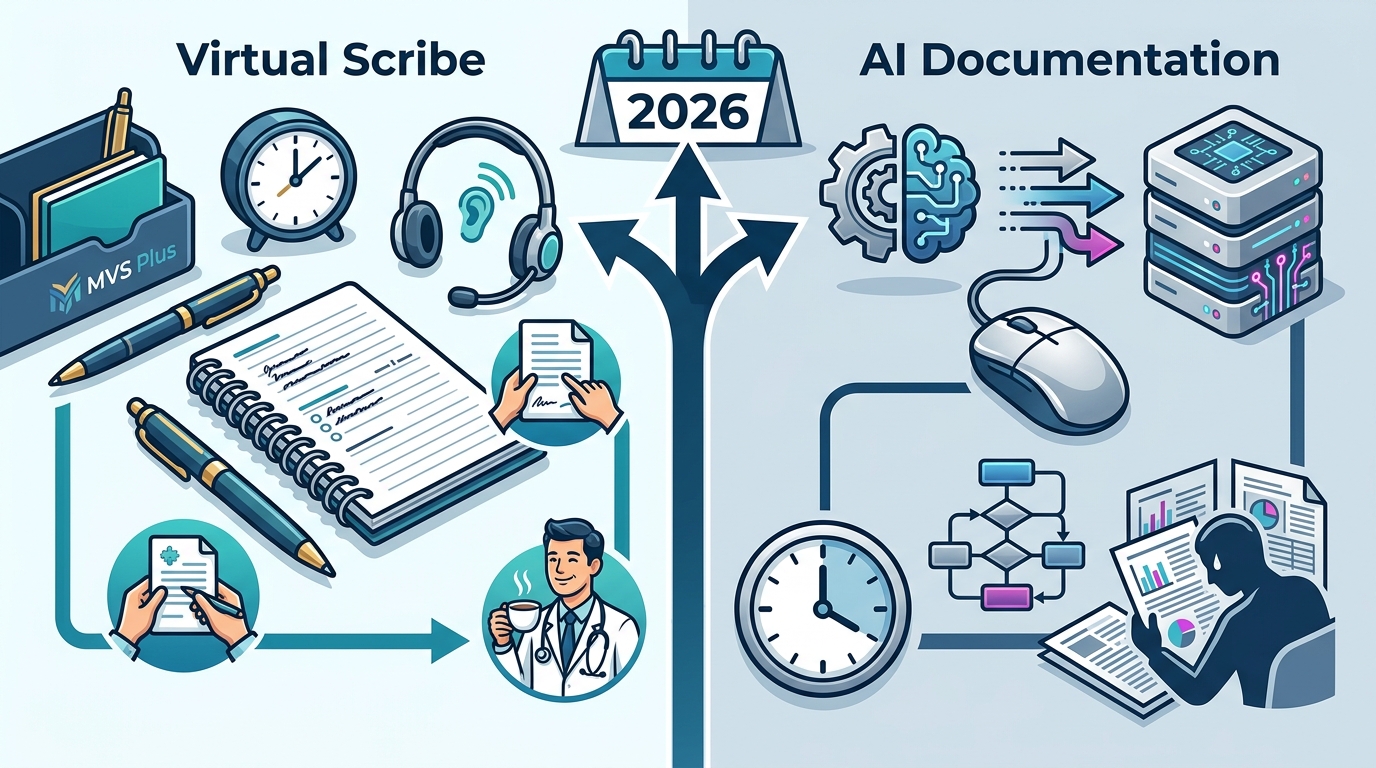
The core difference between these two models lies in the source of the documentation. A virtual medical scribe is a trained human professional who listens to the patient encounter in real-time and documents the visit into your Electronic Health Record (EHR) system. In contrast, AI documentation tools use speech recognition and natural language processing to generate notes after or during the conversation. (Remote Medical Scribes Company)
The Human Advantage
Human scribes bring contextual awareness that AI currently struggles to replicate. They can interpret subtle cues in a patient's tone, clarify ambiguous medical history, and adapt to the unique communication style of each physician. According to a study cited by PubMed, 74.5% of physicians experiencing burnout cite EHR documentation as a major factor. Human scribes directly address this by allowing the physician to maintain eye contact and focus on the patient rather than the screen. This leads to a more personalized care experience that patients can feel.
The AI Efficiency Argument
AI documentation tools are often marketed as a cost-effective, scalable solution. They can process data instantly and do not require scheduling or human oversight. However, AI tools often require significant post-visit editing to correct errors or fill in missing context. While AI can handle structured data well, it often misses the narrative flow of a complex patient history. For practices looking to streamline operations, the choice often comes down to whether they value immediate cost savings or long-term clinical accuracy and physician satisfaction.
Cost Analysis and Pricing Models
Financial considerations are a primary driver for practice managers evaluating documentation solutions. The cost structures for human scribes and AI tools differ significantly in their predictability and scalability.
Virtual Scribe Pricing
Human scribe services typically operate on a subscription or hourly basis. At My Virtual Scribe, we offer competitive rates starting at $10 per hour for remote medical scribes. This model provides predictable costs and allows practices to scale up or down based on patient volume. You pay for the expertise and reliability of a trained professional who is dedicated to your practice's specific needs.
AI Tool Subscription Costs
AI documentation platforms often charge per provider or per encounter. While the per-encounter cost might seem lower initially, the total cost of ownership can increase when factoring in the time physicians spend editing AI-generated notes. Additionally, AI tools may require additional integrations or training modules that add to the overall expense. For small practices, the lower entry price of AI can be attractive, but the long-term value of a human scribe often outweighs the initial savings.
Accuracy, Privacy, and HIPAA Compliance
In healthcare, accuracy and security are non-negotiable. Both human scribes and AI tools must adhere to strict regulatory standards, but they approach these challenges differently.
HIPAA Compliance in Remote Scribing
Remote medical scribes must undergo rigorous background checks and HIPAA training. My Virtual Scribe ensures that all our scribes are equipped with Workspace Security powered by VPN to protect patient data. This multi-layered security approach ensures that every piece of information documented is handled with the highest level of confidentiality. According to industry standards, HIPAA compliance is not just a legal requirement but a cornerstone of patient trust.
AI Data Security Concerns
AI documentation tools process data through cloud-based servers, which raises questions about data privacy and ownership. While many AI providers claim HIPAA compliance, the risk of data breaches or unauthorized access remains a concern for some practice owners. Human scribes, operating within a controlled virtual environment, offer a more transparent and auditable trail of data handling. This transparency is crucial for practices that prioritize patient privacy above all else.
Specialty-Specific Documentation Needs
Different medical specialties have unique documentation requirements that influence the choice between human scribes and AI. A one-size-fits-all approach rarely works in healthcare.
Dermatology and Oncology
Specialties like dermatology and oncology require detailed descriptions of lesions, treatment plans, and complex medication regimens. Human scribes can capture these nuances with precision, ensuring that every detail is recorded accurately. AI tools may struggle with the visual and contextual complexity of these specialties, leading to incomplete or inaccurate notes.
Dental and Optometry
Dental and optometry practices often involve procedural documentation that requires specific coding and imagery. Human scribes can coordinate with the provider to ensure that all procedural details are captured correctly. AI tools may not be as adept at handling the specific terminology and coding requirements of these fields, potentially leading to billing errors or compliance issues.
EHR Integration and Workflow
Seamless integration with existing Electronic Health Record (EHR) systems is critical for any documentation solution. Poor integration can lead to workflow disruptions and increased frustration for both providers and staff.
Human Scribe Integration
Human scribes can adapt to various EHR systems, including Epic, Cerner, and AthenaHealth. They are trained to navigate these systems efficiently, ensuring that notes are entered correctly and promptly. This flexibility allows practices to maintain their current technology stack without needing to invest in new software.
AI Tool Compatibility
AI documentation tools often require specific integrations or plugins to work with different EHR systems. While many major EHR providers have partnered with AI companies, compatibility issues can still arise. Practices must carefully evaluate the integration capabilities of any AI tool before making a decision. My Virtual Scribe works with a wide range of EHR systems to ensure a smooth transition for our clients.
Key Takeaways
- Burnout Reduction: 66 minutes are saved per 8-hour shift when using a medical scribe, according to the American Medical Association.
- Patient Satisfaction: 57% of patients report better interactions when their doctor is assisted by a scribe, per the American Medical Association.
- Cost Efficiency: Virtual scribes at My Virtual Scribe start at $10 per hour, offering a predictable and scalable pricing model.
- Security: My Virtual Scribe uses VPN-powered Workspace Security to ensure HIPAA compliance and data protection.
- Specialty Support: Human scribes provide nuanced documentation for complex specialties like dermatology and oncology.
- EHR Flexibility: Human scribes can adapt to various EHR systems, reducing the need for new software investments.
- Founder Insight: Dr. Behzad Ourmazdi, a neurologist since 2002, founded MVS to alleviate the burnout caused by rigorous EHR requirements.
Frequently Asked Questions
What is the difference between a virtual scribe and an AI scribe?
A virtual scribe is a trained human professional who documents patient encounters in real-time, while an AI scribe uses speech recognition and natural language processing to generate notes automatically. Human scribes offer greater contextual awareness and adaptability.
How much does a remote medical scribe cost?
The cost of a remote medical scribe varies by provider, but My Virtual Scribe offers rates starting at $10 per hour. This pricing model allows practices to scale their scribe support based on their patient volume and budget.
Are virtual medical scribes HIPAA compliant?
Yes, reputable virtual scribe providers like My Virtual Scribe ensure that all staff are HIPAA compliant. We use secure VPN connections and rigorous training to protect patient data and maintain privacy standards.
Can virtual scribes work with any EHR system?
Most virtual scribes are trained to work with major EHR systems such as Epic, Cerner, and AthenaHealth. They can adapt to your specific workflow and documentation requirements.
How do virtual scribes help with physician burnout?
Virtual scribes reduce physician burnout by handling the time-consuming task of EHR documentation. This allows physicians to focus on patient care, leading to better work-life balance and job satisfaction.
What specialties benefit most from virtual scribes?
Specialties with complex documentation needs, such as dermatology, oncology, and internal medicine, benefit significantly from virtual scribes. However, any practice looking to improve efficiency and patient interaction can benefit.
How do I hire a virtual medical scribe?
You can hire a virtual medical scribe by contacting a provider like My Virtual Scribe. The process typically involves a consultation to discuss your needs, followed by onboarding and integration with your EHR system.
Get Started with My Virtual Scribe
Take back control of your practice and improve patient care by choosing the right documentation solution. My Virtual Scribe offers trusted, HIPAA-compliant remote medical scribes tailored to your specialty. Contact us today to schedule a consultation and see how we can help you reduce burnout and increase efficiency.