

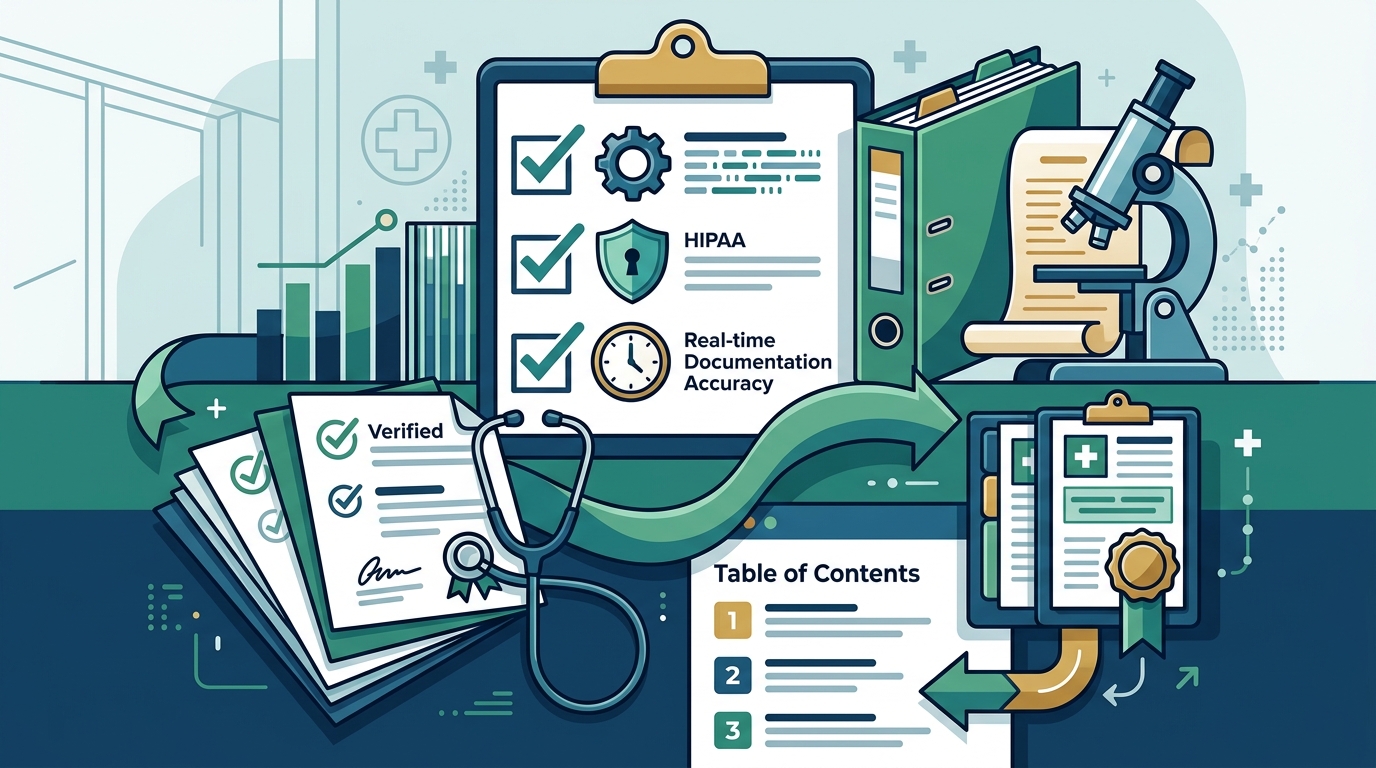
When hiring a virtual medical scribe, prioritize EHR platform proficiency, HIPAA compliance, and real-time documentation accuracy. My Virtual Scribe provides vetted remote scribes who handle documentation under physician supervision. This guide covers the critical criteria for selecting a reliable remote documentation partner.
EHR Platform Proficiency
EHR platform proficiency is the ability of a scribe to navigate and input data into specific Electronic Health Record systems without significant delay. A scribe must understand the unique interface, coding structures, and workflow of your specific software. This skill ensures that documentation happens in real-time during the patient encounter rather than after the fact.
System-Specific Navigation
Different EHR systems have distinct layouts and data entry requirements. A proficient scribe knows where to find patient history, medication lists, and clinical notes within the platform. This familiarity reduces the time spent searching for fields and minimizes the risk of data entry errors. My Virtual Scribe trains its team to adapt quickly to various systems used by healthcare practices.
Real-Time Data Entry
Real-time data entry is the process of recording clinical information as it is spoken during a visit. This method allows the physician to review and sign the note immediately after the encounter. It eliminates the need for after-hours documentation, which is a primary driver of physician burnout. The scribe must type accurately and quickly to keep pace with the conversation.
Integration with Workflow
The scribe must integrate seamlessly into the existing clinical workflow. This includes understanding how to handle patient check-ins, rooming, and discharge instructions within the EHR. A scribe who understands the broader workflow helps the entire care team operate more efficiently. They act as a bridge between the clinical conversation and the digital record.
Compliance and Security Standards
Compliance and security standards are the protocols that protect patient health information from unauthorized access or disclosure. Any virtual scribe must adhere to strict data privacy regulations. This ensures that sensitive medical data remains secure while being transmitted and stored.
HIPAA Compliance
HIPAA compliance is the adherence to the Health Insurance Portability and Accountability Act regulations. This law sets the standard for protecting sensitive patient data. A virtual scribe must sign Business Associate Agreements and follow strict access controls. My Virtual Scribe ensures that all remote scribes are trained in HIPAA protocols to maintain the integrity of your practice's data.
Data Encryption and Access Control
Data encryption is the process of converting information into a code to prevent unauthorized access. Virtual scribes must use secure, encrypted channels to connect to the EHR. Access control ensures that only authorized personnel can view or modify patient records. These technical safeguards are essential for maintaining trust and regulatory compliance.
Documentation Accuracy and Workflow
Documentation accuracy is the precision with which clinical details are recorded in the medical record. Errors in documentation can lead to billing issues, legal complications, and gaps in patient care. A high-quality scribe minimizes these risks through careful listening and precise typing.
Medical Terminology Mastery
Medical terminology mastery is the knowledge of specialized language used in healthcare settings. Scribes must understand complex terms to ensure that notes are clear and accurate. This expertise allows them to capture the physician's intent without ambiguity. It also helps in ensuring that the documentation meets the requirements for medical necessity and coding.
Attention to Detail
Communication and Reliability
Communication and reliability are the traits that ensure a scribe is available and responsive when needed. A virtual scribe must be punctual, professional, and easy to reach. Reliability is critical because the scribe is an integral part of the daily clinical operation.
Professional Demeanor
Professional demeanor is the conduct that reflects respect and competence in a healthcare environment. Even though the scribe is remote, their tone and responsiveness are part of the patient experience. A professional scribe maintains confidentiality and interacts respectfully with the physician and staff. This contributes to a positive and efficient work environment.
Availability and Flexibility
Availability and flexibility are the capacity to align with the practice's schedule. Scribes must be available during clinic hours and ready to start immediately. Flexibility allows the scribe to adapt to last-minute changes in the schedule. My Virtual Scribe offers flexible scheduling options to match the needs of busy practices.
Specialty Alignment and Experience
Specialty alignment is the match between the scribe's experience and the specific medical field of the practice. Different specialties have unique documentation requirements and terminology. A scribe with experience in your specialty will be more efficient and accurate.
Specialty-Specific Documentation
Specialty-specific documentation refers to the unique notes required for different fields of medicine. For example, dermatology requires detailed descriptions of skin lesions, while oncology focuses on treatment protocols. A scribe familiar with these specifics can capture the necessary details without prompting. This saves time and ensures comprehensive records.
Experience with Complex Cases
Experience with complex cases is the ability to handle difficult or lengthy patient encounters. Some visits involve multiple issues or complex medical histories. A scribe with experience in these scenarios remains focused and accurate throughout the visit. They help the physician manage the complexity of the documentation.
Cost and Contract Structure
Cost and contract structure are the financial terms and legal agreements governing the scribe service. Understanding these elements helps practices budget effectively and avoid unexpected fees. A transparent pricing model is essential for a sustainable partnership.
Transparent Pricing Models
Contract Flexibility
Contract flexibility is the ability to adjust the scope of services or terminate the agreement without excessive penalties. Practices should seek contracts that allow for scaling up or down based on demand. Flexible terms ensure that the practice is not locked into a long-term commitment that may not fit its evolving needs.
| Criteria | What to Look For | Why It Matters |
|---|---|---|
| EHR Proficiency | Experience with your specific EHR system | Ensures real-time documentation and reduces errors |
| Compliance | HIPAA training and secure data handling | Protects patient privacy and meets legal requirements |
| Accuracy | Strong medical terminology and attention to detail | Prevents billing issues and ensures complete records |
| Reliability | Punctuality and professional communication | Maintains smooth workflow and patient satisfaction |
| Specialty Fit | Experience in your specific medical field | Improves efficiency and documentation quality |
Key Takeaways
- EHR platform proficiency is essential for real-time documentation and workflow efficiency.
- HIPAA compliance and data security are non-negotiable for any virtual scribe provider.
- Documentation accuracy depends on medical terminology mastery and attention to detail.
- Reliability and professional communication ensure a smooth daily operation.
- Specialty alignment improves the quality and speed of clinical notes.
- Transparent pricing and flexible contracts help practices manage costs effectively.
- My Virtual Scribe provides vetted scribes who meet these critical criteria.
Frequently Asked Questions
What is the primary benefit of hiring a virtual medical scribe?
The primary benefit is the reduction of after-hours documentation, allowing physicians to focus on patient care and reducing burnout.
How does a virtual scribe ensure HIPAA compliance?
Virtual scribes ensure HIPAA compliance by using secure, encrypted connections and adhering to strict data privacy protocols.
Can a virtual scribe work with any EHR system?
Yes, proficient scribes can adapt to various EHR systems, but experience with your specific platform is ideal for efficiency.
What is the difference between a virtual scribe and an in-person scribe?
A virtual scribe works remotely using technology to document in real-time, while an in-person scribe is physically present in the exam room.
How much does a virtual medical scribe cost?
Costs vary by provider, but My Virtual Scribe offers a flat rate structure to help practices budget predictably.
Do virtual scribes replace physicians?
No, virtual scribes provide administrative support and documentation under physician supervision. They do not provide clinical care or diagnosis.
Conclusion
Selecting the right virtual medical scribe requires careful evaluation of EHR proficiency, compliance, and reliability. My Virtual Scribe offers a vetted team of remote scribes designed to support your practice's documentation needs. By focusing on these key criteria, you can find a partner that enhances your workflow and reduces administrative burden. To explore how our services can fit your practice, schedule a consultation with My Virtual Scribe today.