

Doctors can reduce EHR documentation time by adopting remote medical scribes and ambient AI tools that automate note generation and data entry. My Virtual Scribe provides vetted remote scribes who handle documentation under physician supervision, allowing clinicians to focus on patient care. This guide covers the operational impact of documentation burden, the role of human scribes, the rise of ambient AI, and practical implementation strategies for healthcare practices in 2026. For additional details, review the .
The Documentation Burden
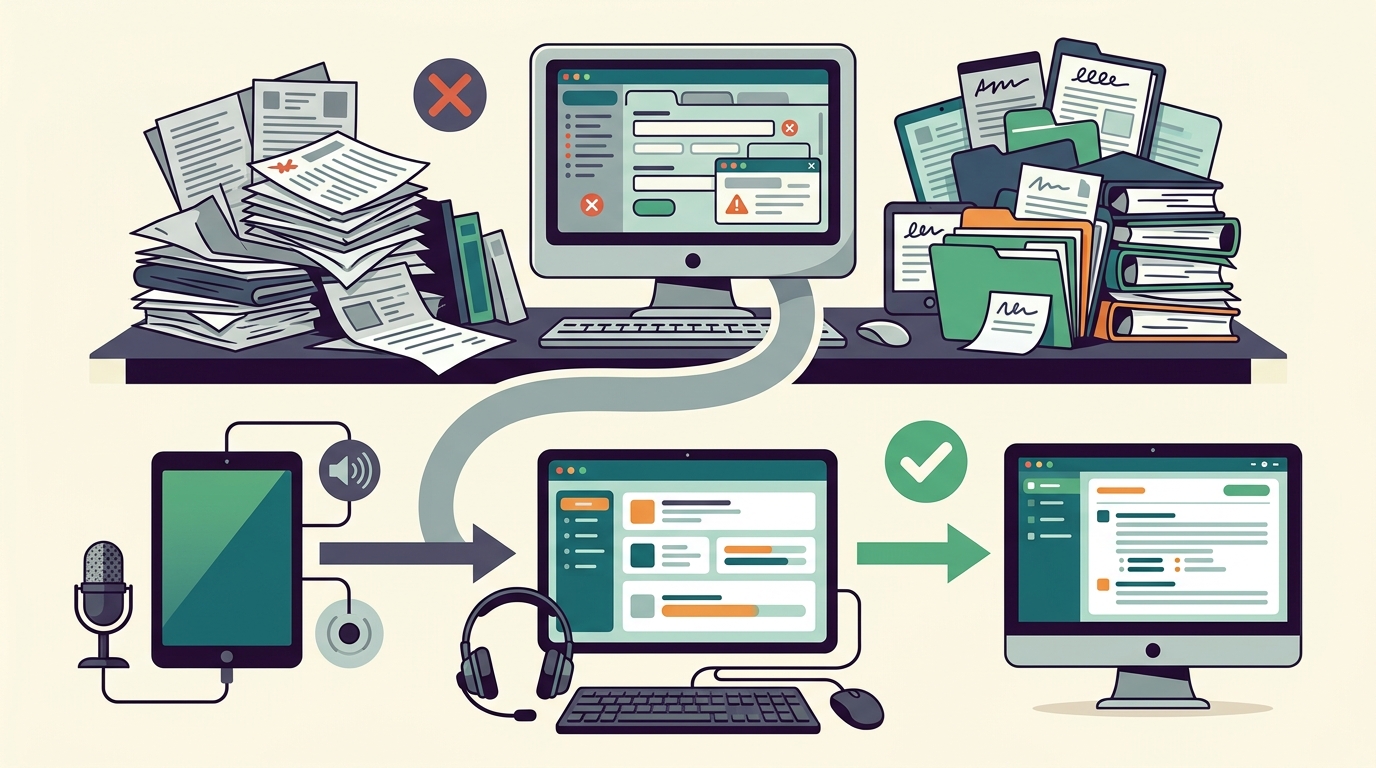
Electronic Health Record (EHR) documentation is a primary driver of physician burnout. Time-and-motion studies show that for every hour of direct patient care, physicians spend about two hours on EHR and administrative tasks, according to a narrative review published in PMC. This imbalance creates a significant operational bottleneck that affects both clinician well-being and patient throughput.
Research published in JAMA Network Open highlights that primary care visits often run for thirty minutes, yet the time spent on the EHR can exceed that duration. One study noted that primary care physicians spent 36 minutes on the EHR for a standard visit. This discrepancy indicates that documentation is not merely an administrative task but a substantial component of the clinical workflow that requires optimization. For additional details, review the Customer Experience.
Reducing this burden is not just about saving time; it is about preserving the cognitive resources needed for clinical judgment. When physicians are overwhelmed by data entry, the quality of patient interaction may suffer. Addressing this issue requires a multi-faceted approach that leverages both human expertise and technological innovation. For additional details, review the Frequently Asked Questions.
Remote Medical Scribes
A remote medical scribe is a trained professional who documents clinical encounters in real-time, often via remote access to the EHR. Unlike in-person scribes, remote scribes work from off-site locations, providing flexibility and scalability for healthcare practices. They capture history, physical exam findings, and physician decisions directly into the EHR, reducing the need for after-hours documentation.
Operational Benefits of Remote Scribes
Quality and Consistency
Consistency in documentation is critical for billing accuracy and legal defensibility. Scribes trained in medical terminology and EHR navigation can ensure that notes are complete and standardized. This consistency helps in reducing audit risks and improving the overall quality of the medical record. Practices that implement scribe services often see a decrease in the time spent on documentation, with some studies showing an 18.5% decrease in time in the EHR for nursing documentation workflows.
Ambient AI Documentation
Impact on Documentation Quality
Studies have shown that AI-produced documentation can achieve higher quality scores. One study found that AI-generated consultations were 26.3% shorter on average, without impacting patient interaction time. This efficiency gain is significant, as it allows physicians to see more patients without extending their workday. The use of ambient AI tools can improve the quality of clinical documentation by ensuring that all relevant details are captured, even those that might be missed in manual typing.
Integration with Human Scribes
Implementation Strategies
Implementing documentation solutions requires a strategic approach. Practices should start by auditing their current EHR usage to identify the most time-consuming tasks. This audit can reveal specific areas where scribes or AI tools can provide the most benefit. For example, if a practice spends significant time on inbox messages, a scribe can help triage and respond to those messages.
Workflow Redesign
Workflow redesign is essential for maximizing the benefits of new tools. This involves mapping out the current documentation process and identifying bottlenecks. Practices should consider how scribes and AI tools fit into the existing workflow. For instance, a scribe might join the visit via video or audio to capture the encounter in real-time, while an AI tool generates a draft note that the physician reviews before signing.
Training and Support
Compliance and Ethics
Compliance with HIPAA and other regulatory standards is paramount when using remote scribes and AI tools. All documentation must be derived from the patient encounter at the time of the visit. It is generally inappropriate to copy and paste or document an entry that is not derived from a direct encounter. Practices must ensure that their scribes and AI tools adhere to these ethical guidelines.
My Virtual Scribe is committed to HIPAA compliance. Our scribes are trained in privacy and security protocols to protect patient data. We do not store or share patient information outside of the secure EHR environment. This commitment to compliance ensures that practices can use our services with confidence, knowing that their data is protected.
Key Takeaways
- Physicians spend approximately two hours on EHR tasks for every hour of patient care, highlighting the need for documentation optimization.
- Remote medical scribes provide real-time documentation support, reducing after-hours work and improving note quality.
- Ambient AI tools can generate shorter, higher-quality notes without reducing patient interaction time.
- Workflow audits and redesign are essential for successfully implementing new documentation tools.
- Compliance with HIPAA and ethical documentation standards is critical when using remote scribes and AI.
- My Virtual Scribe offers vetted, HIPAA-compliant scribes to support healthcare practices in reducing documentation burden.
Frequently Asked Questions
How do remote medical scribes work?
Remote medical scribes join clinical encounters via secure audio or video connections. They listen to the conversation and type notes directly into the EHR in real-time. This allows the physician to focus on the patient while the scribe handles the documentation.
Can AI replace human scribes?
AI and human scribes serve different purposes. AI is excellent for capturing raw data quickly, while human scribes provide contextual understanding and can handle complex EHR navigation. Many practices use a combination of both to optimize their workflow.
Is My Virtual Scribe HIPAA compliant?
Yes, My Virtual Scribe is HIPAA compliant. Our scribes are trained in privacy and security protocols, and we use secure connections to access the EHR. We do not store or share patient information outside of the secure environment.
How much time can scribes save?
The amount of time saved varies by practice and workflow. However, studies have shown that scribes can reduce EHR time by 18.5% or more. This time can be redirected to patient care or other clinical tasks.
Do scribes provide clinical advice?
No, My Virtual Scribe provides non-clinical administrative support. Our scribes do not provide medical advice, diagnoses, or treatment recommendations. Their role is strictly to document the encounter under physician supervision.
How do I get started with My Virtual Scribe?
To get started, you can schedule a consultation with our team. We will discuss your practice's needs and recommend the best scribe solution for your workflow. Our team will handle the onboarding and training to ensure a smooth transition.
Conclusion
Reducing EHR documentation time is essential for physician well-being and practice efficiency. By leveraging remote medical scribes and ambient AI tools, healthcare practices can significantly reduce the administrative burden on their clinicians. My Virtual Scribe provides a reliable, HIPAA-compliant solution that integrates seamlessly into existing workflows. Our vetted scribes offer high-quality support that allows physicians to focus on what matters most: patient care. To learn more about how we can help your practice, contact My Virtual Scribe today.