

7 Top Mistakes Practices Make When Selecting a Remote Scribe Service
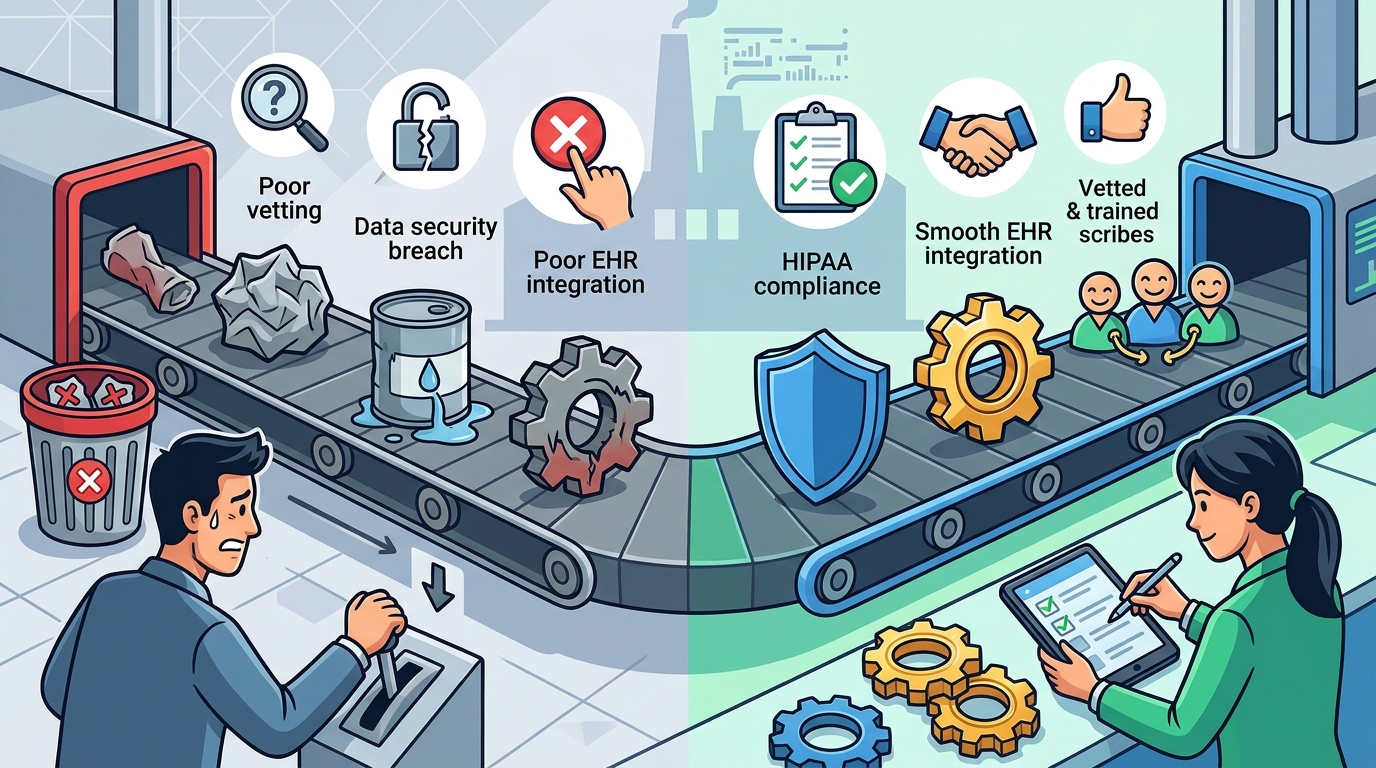
Choosing the wrong remote scribe service can waste budget and increase clinician frustration. Many practices focus on price alone and ignore critical factors like scribe vetting, HIPAA compliance, and integration with their specific EHR. My Virtual Scribe helps healthcare professionals avoid these pitfalls by providing vetted, trained remote scribes who reduce EHR documentation burden. This listicle outlines the most common errors and how to prevent them. For additional details, review the myvirtualscribe us.
1. Ignoring Scribe Vetting and Training Standards
Unvetted scribes introduce documentation errors and compliance risks. A remote medical scribe is a trained professional who documents clinical encounters in real-time under physician supervision. If a provider does not verify the education, clinical terminology knowledge, and background checks of their scribes, the practice faces higher error rates. My Virtual Scribe ensures every scribe undergoes rigorous vetting and training before joining a practice.
2. Overlooking HIPAA Compliance and Security Protocols
Non-compliant services expose patient data to legal and financial liability. HIPAA compliance is a legal requirement for any entity handling protected health information. A remote scribe service must demonstrate robust security measures, including encrypted data transmission and strict access controls. Practices should request documentation of compliance audits and security policies before signing a contract.
3. Failing to Verify EHR Integration Capabilities
4. Choosing Based Solely on Price
Low-cost services often lack quality control and support. The cheapest option may use untrained personnel or provide limited customer support. A remote medical scribe service is an investment in clinician time and patient care quality. Practices should evaluate the total value, including accuracy, responsiveness, and reliability, rather than just the hourly rate.
5. Not Assessing Scalability and Flexibility
6. Ignoring the Importance of Dedicated Support
7. Failing to Define Clear Performance Metrics
Without metrics, it is impossible to measure ROI. Practices should establish key performance indicators (KPIs) such as documentation accuracy, turnaround time, and clinician satisfaction. A remote scribe service is a performance-based partnership, and clear metrics ensure accountability. My Virtual Scribe works with practices to define and track these metrics to demonstrate tangible value.
How to Choose the Right Service
Frequently Asked Questions
What is a remote medical scribe?
A remote medical scribe is a trained professional who documents clinical encounters in real-time from a remote location, working under physician supervision to reduce EHR documentation burden.
How does My Virtual Scribe ensure HIPAA compliance?
My Virtual Scribe implements strict security protocols, including encrypted data transmission and access controls, and adheres to all HIPAA regulations to protect patient information.
Can My Virtual Scribe integrate with my EHR?
What is the cost of remote scribe services?
Do remote scribes replace physicians?
No, remote scribes provide non-clinical administrative support. They do not replace licensed physicians or provide medical advice; they assist with documentation under physician supervision.
Ready to reduce your documentation burden? Schedule a consultation with My Virtual Scribe today. Learn more: myvirtualscribe us.