

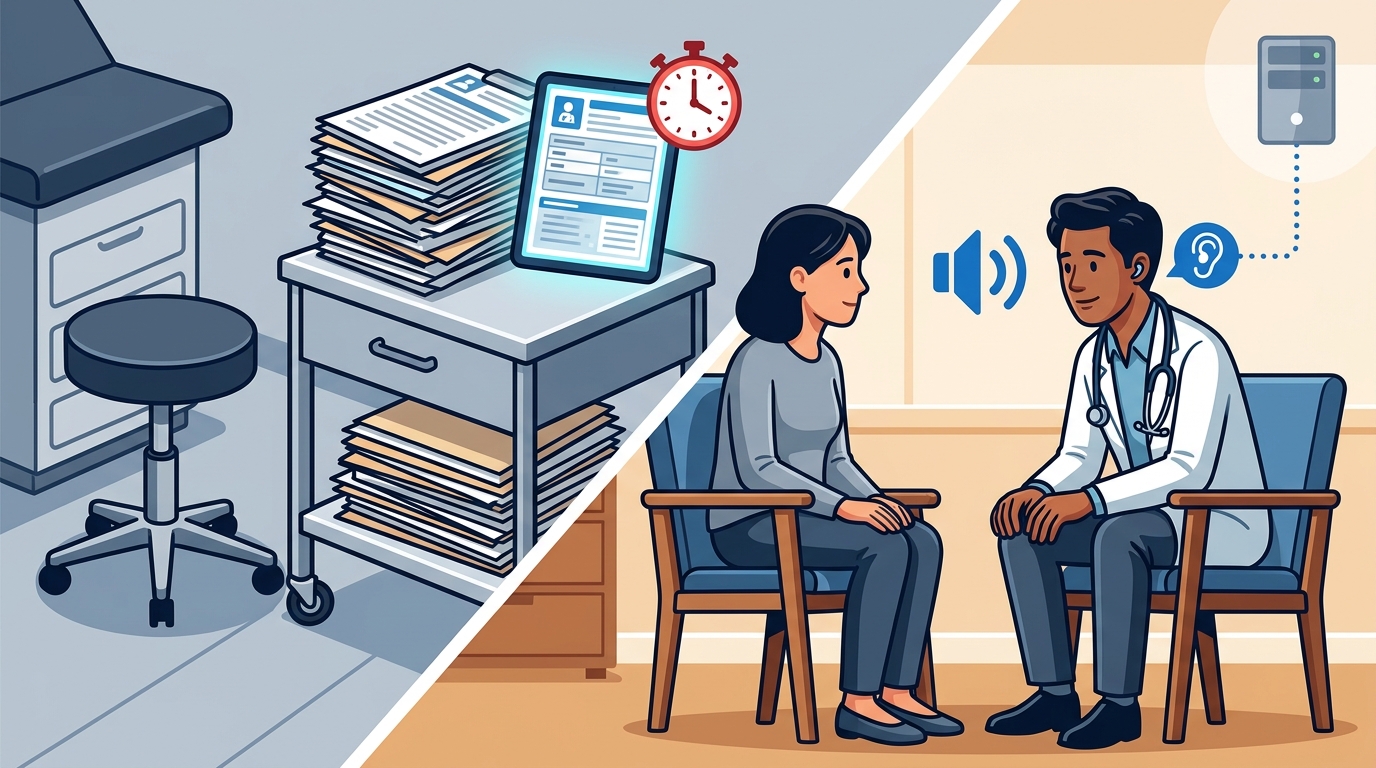
Physician burnout has reached critical levels in modern healthcare, with 74.5% of doctors citing EHR documentation as a major factor in their exhaustion according to PubMed research. This administrative burden directly steals time from the exam room, forcing clinicians to stare at screens instead of looking at patients. The average physician loses approximately 66 minutes per 8-hour shift to charting duties as reported by the American Medical Association. By delegating real-time documentation to a remote medical scribe, practices can reclaim this lost time, allowing for deeper, more meaningful patient interactions that improve clinical outcomes and job satisfaction. (About My Virtual Scribe)
The Burnout Crisis and Documentation
The modern healthcare landscape is defined by a paradox. Technology was introduced to streamline care, yet Electronic Health Record (EHR) systems have become a primary source of physician fatigue. The rigorous requirements for coding and documentation have created a barrier between the doctor and the patient. This phenomenon is often referred to as "pajama time," where physicians spend hours after their clinical day completing notes at home. (FAQs Get Answers About)
My Virtual Scribe (MVS) was founded by Dr. Behzad Ourmazdi, a neurologist who experienced this exact struggle firsthand. After practicing since 2002, he recognized that the administrative load was eroding his passion for medicine. He realized that to save his career and his connection with patients, he needed to remove the documentation burden entirely. This insight led to the creation of a service that prioritizes the physician's ability to focus on the human element of healthcare. (Virtual Scribes and) (Hiring a Virtual Assistant)
The cost of this administrative drag is not just financial; it is emotional. When a physician is distracted by typing, they miss subtle non-verbal cues from patients. This disconnect can lead to misdiagnoses and lower patient trust. By addressing the root cause of this distraction, remote scribes offer a pathway to restore the therapeutic alliance.
How Remote Scribes Work
A remote medical scribe operates differently from an in-person scribe. Instead of physically sitting in the exam room, the scribe connects via a secure, HIPAA-compliant virtual workspace. This setup allows the physician to maintain privacy while the scribe listens to the consultation and documents it in real-time.
The process begins with a secure connection using a laptop or tablet. The scribe hears the conversation and sees the patient's condition if video is enabled. They then input the relevant clinical data directly into your EMR or EHR system. This real-time documentation ensures that the note is accurate, comprehensive, and ready for review before the patient leaves the room.
Security is a paramount concern in this model. MVS provides workspace security powered by VPNs to ensure that all data transmission is encrypted and protected. This level of security matches or exceeds the safety standards of physical scribes, making remote documentation a viable and safe option for sensitive medical practices.
Impact on Patient Interaction
The most significant benefit of using a remote scribe is the restoration of eye contact and active listening. When a physician is free from the keyboard, they can turn their full attention to the patient. This shift in focus allows for a more thorough history taking and a more empathetic examination.
Data shows that 57% of patients report better interactions when their doctor is assisted by a scribe according to the American Medical Association. Patients feel heard and valued when their physician is not distracted by technology. This improved experience often leads to higher patient satisfaction scores and better adherence to treatment plans. (Virtual Scribes and)
Furthermore, the efficiency gained allows physicians to see more patients without compromising the quality of care. By reducing the time spent on each note, practices can increase their daily capacity. This operational efficiency translates to higher revenue potential and reduced wait times for patients. The remote model also offers flexibility, allowing scribes to work across different time zones and specialties.
Specialty Applications
Remote scribes are not a one-size-fits-all solution. They can be tailored to the specific needs of various medical specialties. Whether you practice dermatology, optometry, oncology, or dentistry, the documentation requirements vary significantly. MVS provides specialized virtual assistants who understand the terminology and workflows of these specific fields.
For dermatologists, scribes can document lesion descriptions and biopsy results in real-time. In optometry, they can record visual acuity tests and refraction data. For dental practices, scribes can manage insurance coding and treatment plans. This specialization ensures that the documentation is not just fast, but also clinically accurate.
The flexibility of the remote model allows practices to scale their support up or down based on patient volume. During busy seasons, you can increase the number of scribe hours. During slower periods, you can reduce them to manage costs. This adaptability makes remote scribing a financially sustainable option for practices of all sizes.
Scribe Models Comparison
When considering how to improve patient interaction time, it is essential to compare the different models of scribe support. Each model has distinct advantages and disadvantages regarding cost, flexibility, and integration.
| Feature | Remote Scribe | In-Person Scribe | AI Documentation |
|---|---|---|---|
| Cost Efficiency | High (No office space needed) | Low (Requires physical presence) | Medium (Subscription based) |
| Flexibility | High (Scalable hours) | Low (Fixed shifts) | Medium (Limited by software) |
| Privacy | High (HIPAA compliant VPN) | Medium (Physical presence) | High (Cloud security) |
| Integration | Direct EMR input | Direct EMR input | Variable |
Remote scribes offer a superior balance of cost and flexibility. They eliminate the overhead costs associated with in-person staff, such as office space and equipment. At the same time, they provide a human touch that AI tools often lack. The ability to have a trained professional listen and document ensures that nuance and context are not lost in translation.
Key Takeaways
- Time Savings: Physicians save an average of 66 minutes per shift by using a remote scribe. (Implementation of a)
- Burnout Reduction: 74.5% of physicians cite EHR documentation as a primary cause of burnout.
- Patient Satisfaction: 57% of patients report better interactions with scribe-assisted doctors.
- Founder Expertise: MVS was founded by Dr. Behzad Ourmazdi, a neurologist with over 20 years of experience.
- Security: Remote scribes use VPN-powered workspace security for HIPAA compliance.
- Specialty Support: Services are tailored for dermatology, optometry, oncology, and dental practices.
- Cost Effectiveness: Remote models reduce overhead compared to in-person scribe services.
Frequently Asked Questions
How does a remote scribe ensure HIPAA compliance?
Remote scribes use secure, VPN-powered workspaces that encrypt all data transmission. This ensures that patient information remains confidential and protected in accordance with HIPAA regulations.
Can a remote scribe handle complex medical terminology?
Yes. MVS provides trained medical scribes who specialize in various fields, including dermatology, oncology, and dentistry. They are proficient in the specific terminology and coding requirements of these specialties.
What is the cost of hiring a remote medical scribe?
The cost varies based on the number of hours and the specific specialty. However, remote scribes are generally more cost-effective than in-person scribes due to lower overhead. You can view detailed pricing on our pricing page.
How quickly can a remote scribe integrate with my EHR system?
Remote scribes can integrate with most major EHR systems. The onboarding process is designed to be seamless, allowing your scribe to start documenting in real-time within days of signing up.
Does the patient know there is a remote scribe?
Yes, transparency is key. Patients are informed that a remote scribe is present to assist with documentation. This often enhances their experience by allowing the physician to focus entirely on them.
Can I hire a remote scribe for specific shifts only?
Absolutely. One of the main advantages of the remote model is flexibility. You can hire scribes for specific shifts, days, or even individual appointments, scaling your support as needed.
What if I need a scribe for a non-clinical specialty?
MVS also offers virtual assistants for administrative, reception, and billing tasks. This allows you to streamline your entire practice, not just the clinical documentation.
Get Started Today
Reclaim your time and restore the human connection in your practice. My Virtual Scribe offers a risk-free trial to help you experience the benefits of remote documentation firsthand. Contact us today to schedule a consultation and learn how we can support your practice. Visit our contact page to get started.