

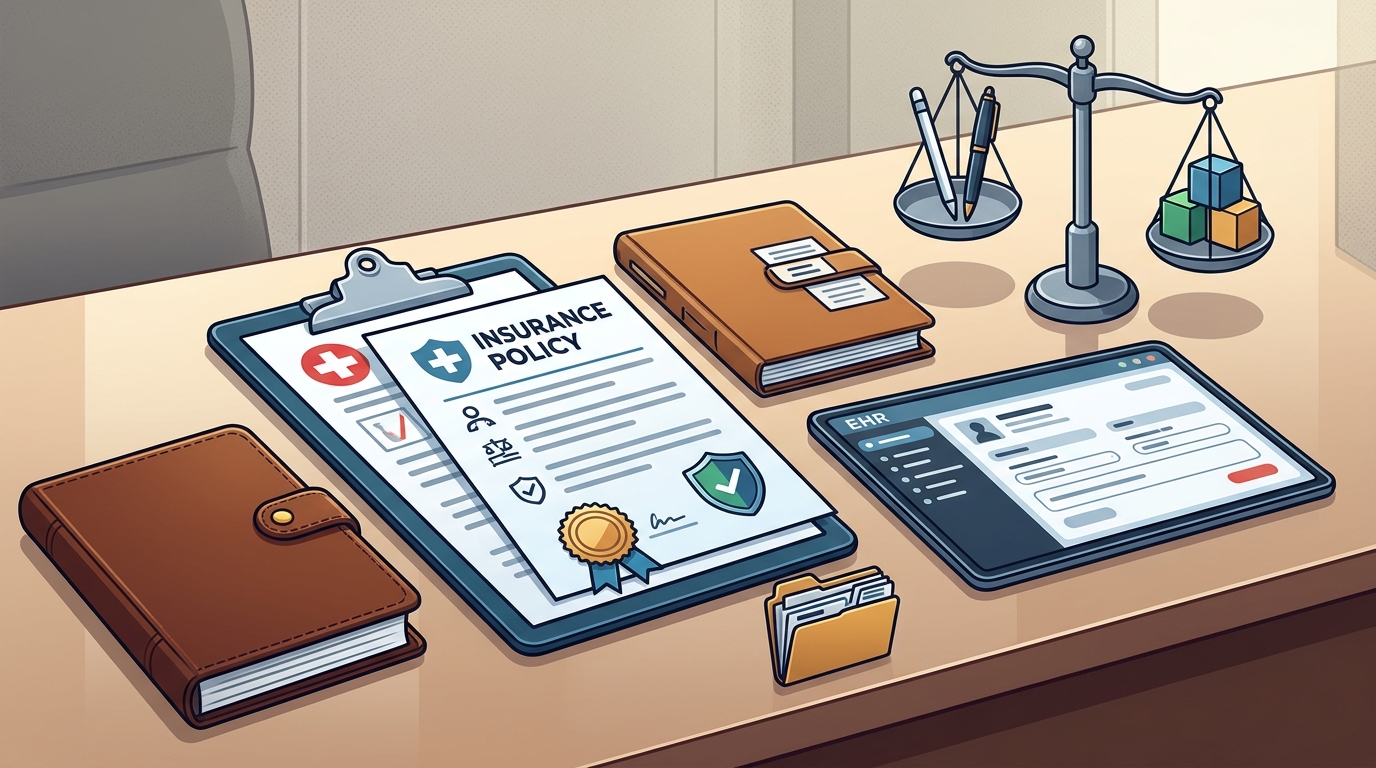
Professional liability insurance is a financial safeguard that protects healthcare entities from claims of negligence or errors in administrative support. When hiring a remote medical scribe, this coverage ensures that documentation errors do not result in uncovered legal costs for your practice. Medical scribes operate under physician supervision to assist with administrative tasks. Understanding this insurance is critical for protecting your medical license and financial stability.
Defining Professional Liability in Healthcare
Professional liability insurance is a type of coverage that defends against claims of professional negligence. In the context of medical scribing, this often overlaps with Errors and Omissions (E&O) insurance. E&O insurance is a specific form of professional liability that covers failures to perform services as promised. For a physician, this means protecting against claims that a documentation error led to a patient injury or a billing dispute.
It is important to distinguish this from general commercial general liability (CGL). CGL covers bodily injury and property damage, such as a slip and fall. It does not cover professional services. Therefore, a scribe service must carry specific professional liability coverage to protect the client practice from documentation-related claims.
Documentation Errors and Legal Exposure
Medical documentation is a legal record. Inaccurate notes can lead to misdiagnosis, improper treatment, or insurance claim denials. When a scribe makes an error, the supervising physician is often held liable. This is because the physician signs the chart and assumes responsibility for its content. The risk is not just about bad notes; it is about the legal interpretation of those notes in a malpractice lawsuit.
Consider a scenario where a scribe fails to document a patient's allergy. If the patient later receives a medication that causes a severe reaction, the missing documentation becomes a central piece of evidence. The insurance policy must cover the legal defense costs and any resulting settlements. Without proper coverage, the practice bears the full financial burden of the lawsuit.
What to Look For in Scribe Insurance
Furthermore, inquire about the insurer's reputation. A reputable insurance carrier is more likely to handle claims fairly and efficiently. Medical scribe services should adhere to documentation standards. Quality training reduces the likelihood of errors, which in turn lowers the frequency of insurance claims. However, insurance is a safety net, not a substitute for quality control.
HIPAA and Data Security Intersections
Medical scribe services must ensure HIPAA compliance for their operations. By maintaining high security standards, the service reduces the risk of data breaches that could lead to liability claims. This dual approach of insurance and security provides a comprehensive risk management strategy for your practice.
Contractual Protections and Indemnification
Additionally, the contract should specify the scope of the scribe's duties. Clear definitions of responsibilities help prevent disputes over who is liable for a specific error. For example, if the scribe is only responsible for typing dictated notes, they are not liable for clinical decisions. This clarity is essential for both legal defense and insurance claim processing.
Key Takeaways
- Professional liability insurance covers negligence claims related to professional services.
- E&O insurance is a specific type of professional liability coverage for documentation errors.
- Verify that the scribe service carries adequate insurance limits and lists your practice as an additional insured.
- Data security measures are critical to preventing liability claims from data breaches.
- Contractual indemnification clauses provide an additional layer of financial protection.
- Clear definitions of scribe duties in the contract help clarify liability in case of errors.
Frequently Asked Questions
Does medical scribe insurance cover malpractice?
Medical scribe insurance typically covers professional liability claims related to documentation errors. It does not cover clinical malpractice, as scribes do not provide medical care. The supervising physician's malpractice insurance covers clinical decisions, while the scribe's insurance covers administrative errors.
What is the difference between E&O and professional liability insurance?
How much insurance coverage should a scribe service have?
Does My Virtual Scribe carry professional liability insurance?
We recommend that practices verify the insurance details of any scribe service they hire. You can request a Certificate of Insurance from the provider to confirm coverage limits and additional insured status.
What happens if a scribe makes a documentation error?
If a scribe makes an error, the supervising physician is responsible for correcting it. If the error leads to a claim, the scribe service's insurance may cover the legal defense costs. The specific outcome depends on the terms of the insurance policy and the contract between the practice and the scribe service. Learn more: myvirtualscribe us.