

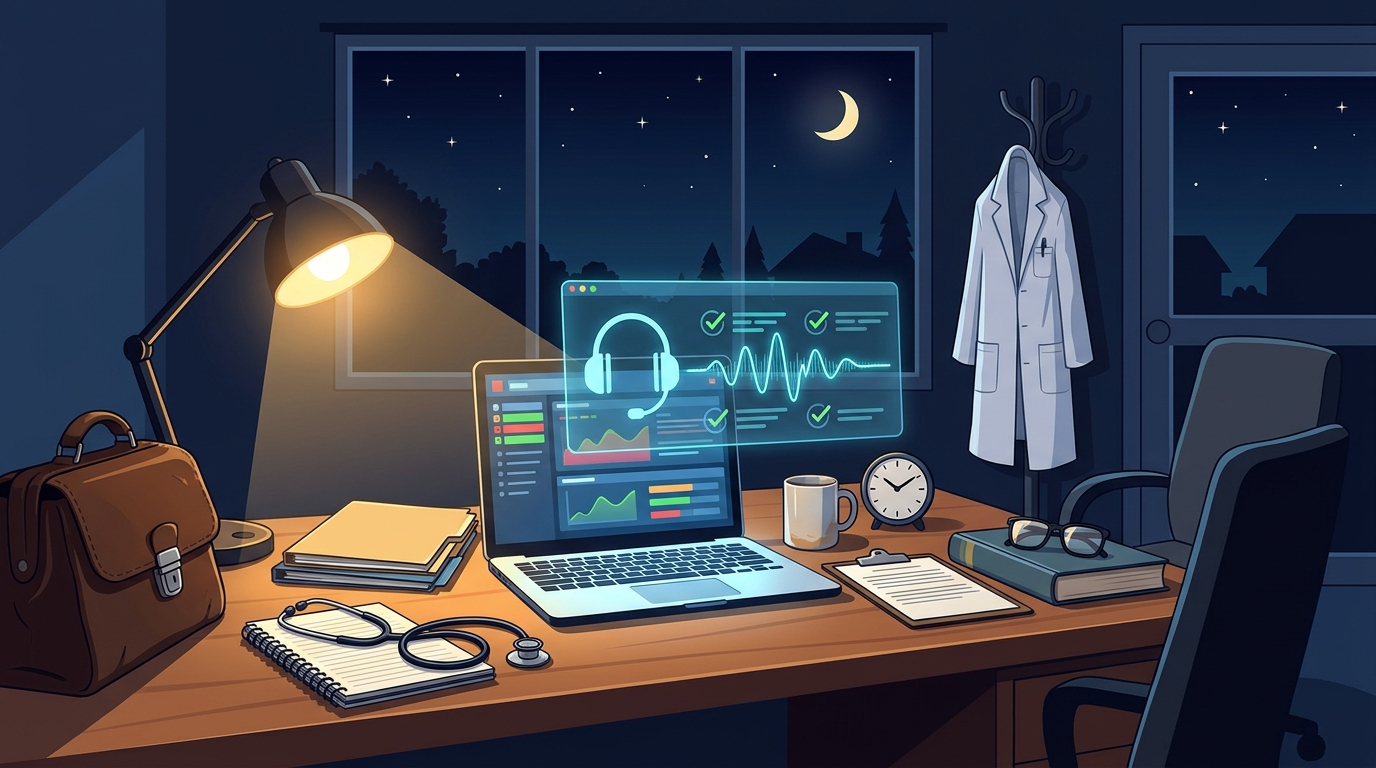
After-hours charting is the practice of completing electronic health record (EHR) documentation outside of regular clinical hours. It is a major contributor to physician burnout and reduced work-life balance. My Virtual Scribe addresses this issue by providing remote medical scribes who capture documentation in real-time, allowing physicians to close their charts during clinic hours rather than at home.
The Reality of After-Hours Documentation
Physicians often face a significant gap between patient care and administrative completion. This gap forces many doctors to log into their EHR systems late at night or on weekends. The burden is not just about time; it is about cognitive fatigue. When a physician returns home after a full day of patient interactions, the mental energy required to recall specific clinical details for charting is often depleted.
Research indicates that the timing of documentation impacts its quality. A study published in the Journal of the American Board of Family Medicine analyzed EHR audit-log data and found that physicians who used scribes had different chart closure patterns compared to those who did not. While the study noted complexities in chart closure times, the core issue remains: documentation that is delayed is often more difficult to complete accurately and efficiently.
For many practices, after-hours charting is an invisible tax on the physician's personal life. It reduces the time available for family, rest, and professional development. The implication is clear: if documentation is not handled in real-time, it becomes a persistent background task that never truly ends.
How Remote Scribes Intercept the Burden
Remote medical scribing is a service where a trained professional joins a virtual visit or is present in the exam room to capture clinical data in real-time. This is distinct from transcription, which is a post-visit process. A scribe listens to the physician-patient interaction and inputs the information directly into the EHR as it happens.
By capturing the narrative in the moment, the scribe ensures that the clinical context is fresh. This allows the physician to review and sign the note immediately after the visit. The American College of Medical Supervision Officers highlights that scribes reduce after-hours charting by improving billing accuracy and allowing more face-to-face time. The key mechanism is the shift of the documentation workload from the physician's personal time to the clinical encounter itself.
For My Virtual Scribe, this means deploying vetted scribes who understand medical terminology and EHR workflows. The scribe does not make clinical decisions; they document what the physician dictates. This separation of roles ensures that the physician retains full clinical judgment while offloading the administrative labor.
The Impact on Physician Efficiency and Satisfaction
When after-hours charting is eliminated, physician efficiency improves significantly. Doctors can see more patients in a day because the time spent on documentation is compressed. This is not just about speed; it is about flow. A physician who can close a chart in the exam room can move to the next patient without the mental friction of unfinished tasks.
The implication for healthcare practices is that investing in scribing is an investment in staff retention. Physicians who are less burned out are more likely to stay with their practice, reducing the high costs associated with recruitment and turnover.
Implementing a Remote Scribing Solution
Once the scribe is assigned, they join the virtual visits or are present in the clinic. The physician dictates the note, and the scribe inputs it. The physician reviews the note and signs it. This workflow is seamless and requires minimal adjustment from the physician's routine. The result is a significant reduction in after-hours work.
Key Takeaways
- After-hours charting is a major contributor to physician burnout and reduced work-life balance.
- Remote medical scribes capture documentation in real-time, allowing physicians to close charts during clinic hours.
- Real-time documentation improves the accuracy and completeness of clinical notes.
- Reducing after-hours charting increases physician efficiency and satisfaction.
- Choosing a scribe service with specialty expertise and EHR proficiency is critical for success.
- My Virtual Scribe provides vetted and trained scribes to help healthcare practices reduce documentation burden.
Frequently Asked Questions
What is after-hours charting?
After-hours charting is the practice of completing electronic health record documentation outside of regular clinical hours, often in the evening or on weekends. It is a common source of stress and burnout for physicians.
How do remote scribes help with after-hours charting?
Remote scribes capture clinical documentation in real-time during patient visits. This allows physicians to review and sign notes immediately, eliminating the need to complete them later at home.
Is remote scribing HIPAA-compliant?
Yes, reputable remote scribing services like My Virtual Scribe are HIPAA-compliant. They use secure connections and trained staff to ensure patient data is protected.
Do scribes make clinical decisions?
Can remote scribes work with any EHR system?
Most remote scribing services are trained to work with major EHR systems. It is important to choose a provider that has experience with your specific EHR platform to ensure seamless integration.
How does My Virtual Scribe differ from other scribe services?
My Virtual Scribe focuses on providing vetted and trained scribes who are matched to the physician's specialty. This ensures that the scribe understands the specific terminology and workflows of the practice. Learn more: myvirtualscribe us.