

Verifying HIPAA Compliance and Data Security
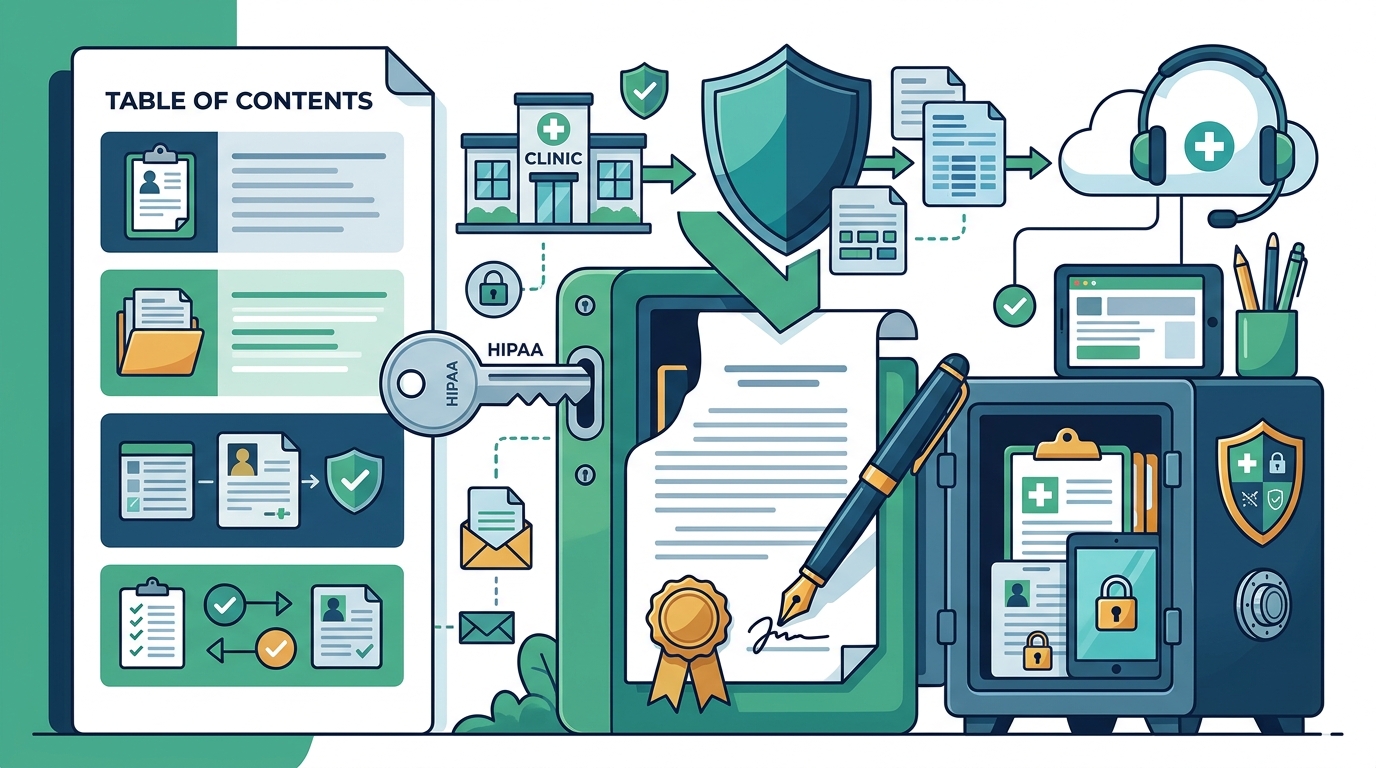
Healthcare documentation involves sensitive patient data, making security a non-negotiable requirement. A remote scribe service is a third-party vendor that accesses protected health information (PHI) on behalf of a practice. Therefore, the provider must demonstrate strict adherence to the Health Insurance Portability and Accountability Act (HIPAA). Practices should request a Business Associate Agreement (BAA) before any data exchange occurs. This legal contract ensures the vendor is liable for data breaches and security failures.
Assessing EHR Compatibility and Workflow Integration
Evaluating Scribe Vetting and Training Standards
The quality of documentation depends heavily on the competence of the scribes. Scribe vetting is the process of screening candidates for medical terminology knowledge, typing speed, and reliability. A robust vetting process ensures that only qualified individuals handle patient notes. My Virtual Scribe employs a rigorous training program for its remote scribes. This training covers medical terminology, EHR navigation, and documentation standards.
Practices should ask about the provider's ongoing training and quality assurance measures. Do scribes receive regular feedback on their documentation accuracy? Is there a system for correcting errors in real-time? High-quality scribe services monitor documentation quality continuously. This ensures that notes meet the specific requirements of the practice's specialty. For instance, a cardiology practice may require different documentation details than a dermatology clinic. My Virtual Scribe tailors its training to address these specialty-specific needs.
Understanding Cost Structures and Service Models
Key Takeaways
- Verify that the remote scribe service is HIPAA-compliant and willing to sign a Business Associate Agreement.
- Ensure the provider is compatible with your specific EHR system to avoid workflow disruptions.
- Investigate the scribe vetting and training processes to guarantee high-quality documentation.
- Compare different cost structures, such as hourly versus flat-rate, to find the best financial fit.
- Assess the provider's quality assurance measures to maintain documentation accuracy over time.
- Consider the potential return on investment, including increased patient capacity and reduced physician burnout.
Frequently Asked Questions
How do remote scribes ensure patient data security?
Remote scribes ensure patient data security by using encrypted communication channels and secure login procedures. My Virtual Scribe requires all scribes to complete HIPAA training and adhere to strict data handling protocols. This minimizes the risk of data breaches and ensures compliance with healthcare regulations.
Can remote scribes work with any EHR system?
What is the typical cost of a remote scribe service?
How are remote scribes trained?
Remote scribes undergo rigorous training in medical terminology, EHR navigation, and documentation standards. My Virtual Scribe provides ongoing training and quality assurance to ensure that scribes maintain high performance levels. This continuous education helps scribes adapt to new technologies and documentation requirements. Learn more: myvirtualscribe us.