

Remote medical scribes are trained professionals who document patient encounters in real-time via secure video or audio links. They handle Electronic Health Record (EHR) data entry, allowing physicians to focus on clinical care. My Virtual Scribe provides these vetted scribes to reduce documentation burden. This service is worth it for practices seeking to reclaim physician time and improve coding accuracy.
Core Duties of a Remote Scribe
Real-Time Documentation
Scribes join visits through secure, HIPAA-compliant platforms. They type notes as the conversation happens. This eliminates the need for physicians to dictate or type after hours. The scribe ensures that all relevant clinical details are captured accurately. This real-time approach reduces the lag between care and documentation.
Template and Coding Support
Integration with Electronic Health Records
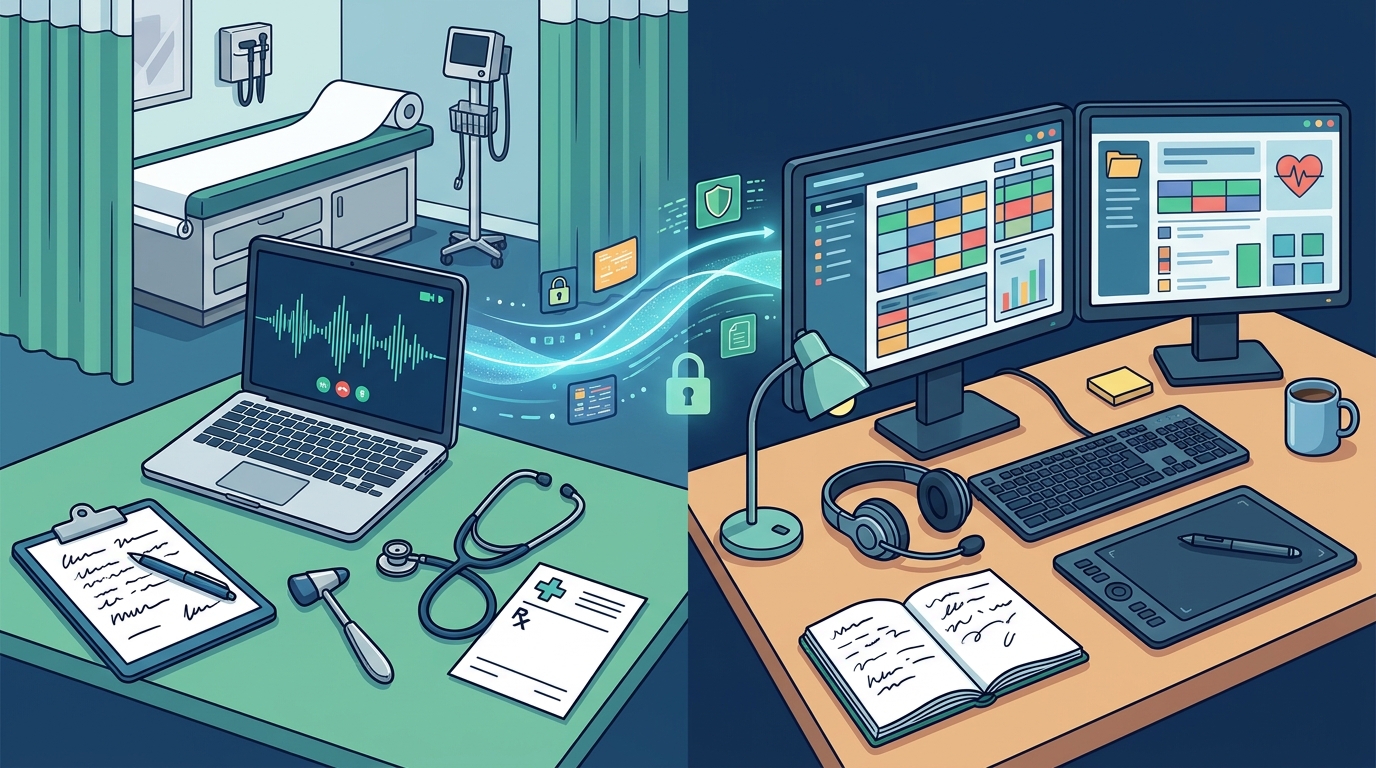
EHR integration is the technical process of connecting scribe input to the practice's software. My Virtual Scribe scribes are trained on major EHR systems. They know where to place data fields for efficiency. This familiarity reduces the time physicians spend correcting notes later. The scribe acts as a bridge between the clinical conversation and the digital record.
Reducing Clicks and Navigation
Physicians often spend significant time navigating complex EHR interfaces. A remote scribe handles this navigation. They know the shortcuts and workflows for specific systems. This reduces cognitive load on the provider. The physician can maintain eye contact with the patient. The scribe manages the screen in the background.
Data Accuracy and Consistency
Consistent documentation is critical for legal and clinical reasons. Scribes follow standardized templates. This ensures that every note contains the same essential elements. It reduces variability in documentation style. Consistent notes are easier to review and audit. They also improve the quality of the medical record over time.
Is It Worth It for Your Practice?
The value of remote scribes is measured in time savings and revenue protection. Physicians often spend hours on documentation after clinic hours. This leads to burnout and reduced patient capacity. By delegating documentation, practices can see immediate relief. The return on investment comes from reclaimed time and improved coding accuracy.
Time Reclamation
Studies suggest that physicians spend more time on documentation than on patient care. Remote scribes can reduce this time significantly. A physician who spends two hours on notes daily can use that time for more patients. Or they can use it for professional development. This flexibility is a key benefit for solo and small practices.
Revenue Cycle Impact
Implementation and Workflow
Implementing remote scribes requires a clear workflow. The practice must define which visits are covered. It must also establish communication protocols. My Virtual Scribe helps practices set up these workflows. The goal is seamless integration into the existing schedule. Scribes are assigned based on specialty and availability.
Onboarding and Training
Quality Assurance
Regular feedback is essential for maintaining quality. Physicians should review notes periodically. They can provide feedback to the scribe on specific areas. This continuous improvement loop ensures that documentation remains accurate. It also builds trust between the physician and the scribe.
Key Takeaways
- Remote medical scribes are administrative professionals who document patient encounters in real-time.
- They do not provide clinical care, diagnosis, or treatment.
- My Virtual Scribe provides vetted scribes trained on major EHR systems.
- The primary value is time savings for physicians and improved coding accuracy.
- Implementation requires clear workflows and ongoing quality assurance.
- Services are HIPAA-compliant and operate under physician supervision.
Frequently Asked Questions
Do remote scribes replace physicians?
No, remote scribes do not replace physicians. They are administrative support staff. They handle documentation tasks. The physician remains responsible for all clinical decisions. The scribe assists with data entry and note structuring.
Are remote scribes HIPAA compliant?
Yes, reputable providers like My Virtual Scribe ensure HIPAA compliance. Scribes sign Business Associate Agreements. They use secure, encrypted platforms for communication. This protects patient health information. Compliance is a core requirement for the service.
What EHR systems do scribes support?
Scribes are typically trained on major EHR platforms. My Virtual Scribe scribes have experience with various systems. They can adapt to the specific software used by the practice. Training is provided to ensure familiarity with the interface.
How much time can a scribe save?
Time savings vary by practice and physician. Many physicians report saving several hours per week. This time can be used for patient care or other tasks. The exact amount depends on the volume of visits and documentation complexity.
Can scribes help with medical coding?
Scribes can structure notes to support coding. They ensure that documentation reflects the level of service. However, they do not assign final codes. The practice's billing team or physician makes the final coding decisions. Scribes provide the accurate data needed for proper coding. Learn more: myvirtualscribe us.