

Physician burnout has reached critical levels, with 74.5% of doctors citing EHR documentation as a major factor in their exhaustion according to PubMed research. This crisis has accelerated the adoption of medical scribes, yet practices remain divided on the delivery model. The debate between traditional in-person scribes and modern remote virtual scribes centers on cost, compliance, and clinical impact. Understanding these differences is essential for healthcare leaders aiming to restore work-life balance without compromising patient care quality.
What Are Medical Scribes?
A medical scribe is a trained professional who documents the physician-patient encounter in real time. This role allows the doctor to maintain eye contact and focus entirely on the clinical assessment rather than typing notes into the Electronic Health Record (EHR). The medical scribe is a specialized healthcare support role dedicated to reducing administrative burden. By handling the documentation workflow, scribes enable providers to see more patients and reduce the after-hours charting that leads to burnout.
Historically, this role was filled by individuals sitting physically in the exam room. However, technological advancements have shifted the industry toward remote solutions. My Virtual Scribe (MVS) represents this shift by offering remote medical scribe services that blend technology with medical documentation. This evolution addresses the logistical challenges of hiring, training, and managing on-site staff while maintaining high standards of care.
The Traditional In-Person Model
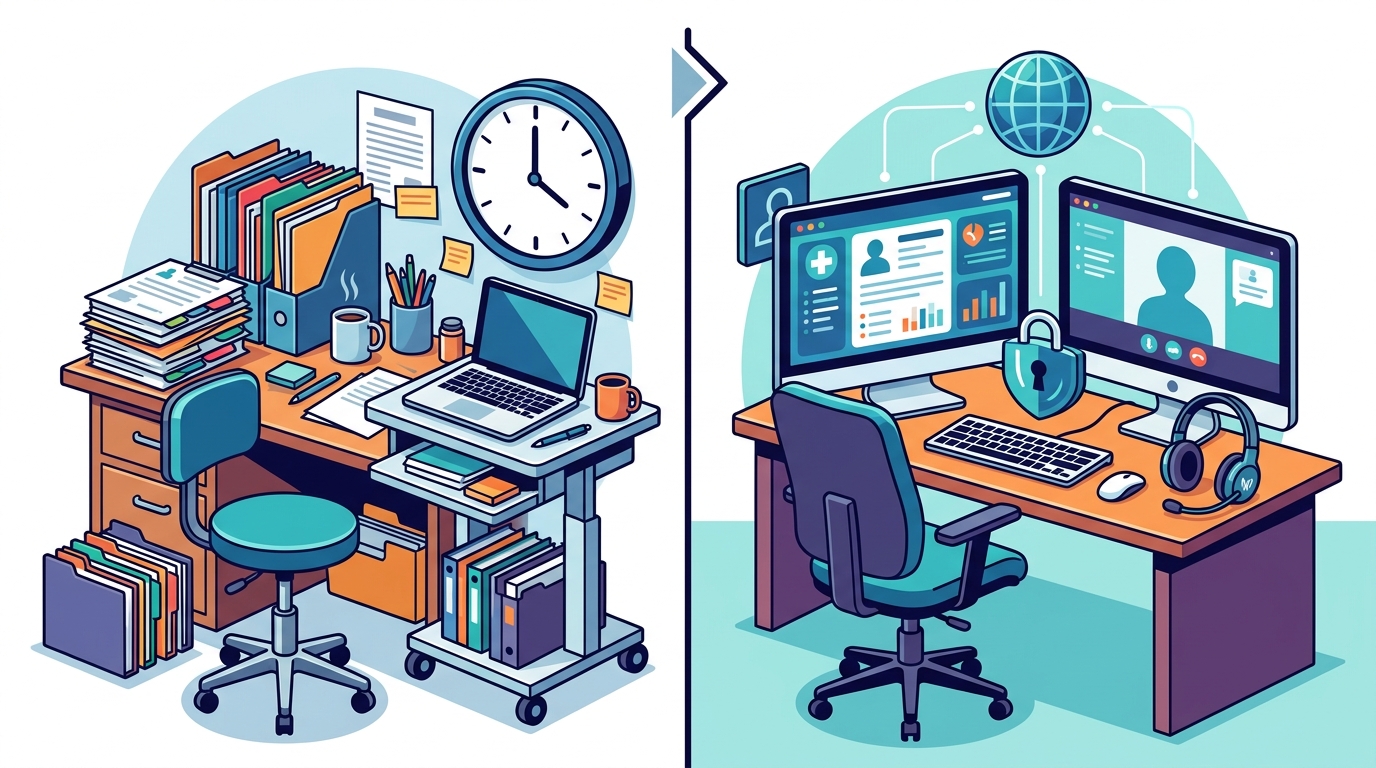
In-person scribes have been the standard for over two decades. They sit directly in the exam room, observing the interaction and typing notes into the EHR system as the physician speaks. This model offers immediate, tactile support and allows for real-time clarification of clinical details without digital latency.
Advantages of On-Site Support
The primary benefit of an in-person scribe is the elimination of communication barriers. There is no risk of audio dropouts or video lag. The scribe can also observe non-verbal cues and physical exam findings directly, which may enhance documentation accuracy in complex cases. For practices that value face-to-face collaboration, this model provides a sense of immediate accountability and team cohesion.
Operational Challenges
Despite these benefits, the in-person model carries significant operational burdens. Hiring on-site staff requires navigating local labor laws, providing physical workspace, and managing payroll taxes. Furthermore, the cost structure is rigid. Practices must pay for full-time or part-time salaries regardless of patient volume fluctuations. This inflexibility can strain small practices or solo practitioners who experience variable scheduling demands.
Additionally, in-person scribes are subject to local talent pools. In rural or underserved areas, finding qualified candidates with the necessary medical terminology knowledge can be difficult. This geographic limitation often forces practices to compromise on candidate quality or offer higher wages to attract talent.
The Remote Virtual Scribe Model
Remote medical scribes operate from off-site locations, connecting to the practice via secure video and audio links. They listen to the patient encounter and document the visit in real time. This model has gained rapid traction due to its scalability and cost efficiency. My Virtual Scribe, for example, provides trained medical scribes who work remotely to support various specialties including dermatology, optometry, and oncology.
Cost Efficiency and Scalability
One of the most compelling arguments for remote scribes is the reduction in overhead costs. Practices avoid the expenses associated with on-site employment, such as benefits, office space, and equipment. Instead, they often pay a predictable subscription or hourly rate. This flexibility allows practices to scale their scribe support up or down based on patient volume. For instance, a practice might increase scribe hours during peak flu season and reduce them during slower periods.
Enhanced Privacy and Security
Remote scribes can enhance patient privacy by removing a third person from the exam room. Patients often feel more comfortable discussing sensitive topics when they are alone with their physician. The scribe monitors the interaction from a secure, remote location, ensuring that the clinical environment remains intimate. My Virtual Scribe emphasizes HIPAA compliance and workspace security powered by VPNs to ensure data protection.
Specialized Expertise
Remote platforms often allow practices to access scribes with specialized training in specific medical fields. Whether a practice needs a scribe familiar with complex oncology coding or dermatological visual documentation, remote networks can match the right talent. This access to a broader talent pool ensures higher quality documentation and better clinical accuracy.
Key Differences: Cost, Compliance, and Impact
Choosing between in-person and remote scribes requires evaluating specific practice needs. The following table summarizes the core differences across critical operational dimensions.
| Feature | In-Person Scribe | Remote Virtual Scribe |
|---|---|---|
| Cost Structure | High fixed costs (salary, benefits, taxes) | Flexible pricing (hourly or subscription) |
| Privacy Impact | Third party in the room | Physician and patient alone |
| Compliance | Dependent on individual training | Platform-wide HIPAA and VPN security |
| Talent Access | Local geographic limitations | National or global talent pool |
| Workflow Integration | Direct, tactile interaction | Real-time digital documentation |
Research indicates that 66 minutes are saved per 8-hour shift when using a medical scribe according to the American Medical Association. This time savings is consistent across both models, but the remote model often delivers this efficiency with lower administrative friction. Furthermore, 57% of patients report better interactions when their doctor is assisted by a scribe according to the American Medical Association. Remote scribes contribute to this outcome by allowing the physician to maintain undivided attention on the patient.
Key Takeaways
- Burnout Reduction: 74.5% of physicians cite EHR documentation as a major factor in burnout, highlighting the urgent need for scribe support.
- Time Savings: Scribes save an average of 66 minutes per shift, allowing for earlier clinic closures and reduced after-hours charting.
- Patient Satisfaction: 57% of patients report better interactions with scribe-assisted physicians, enhancing trust and communication.
- Cost Flexibility: Remote scribes offer scalable pricing models that adapt to patient volume, unlike fixed in-person salaries.
- Privacy Benefits: Remote scribes allow the physician and patient to be alone in the room, improving comfort for sensitive discussions.
- Specialized Support: Virtual platforms provide access to scribes trained in specific specialties like dermatology and oncology.
- Founder Insight: My Virtual Scribe was founded by Dr. Behzad Ourmazdi, a neurologist who experienced burnout from EHR requirements firsthand.
Frequently Asked Questions
Are remote medical scribes HIPAA compliant?
Yes, reputable remote scribe services like My Virtual Scribe utilize secure VPNs and encrypted connections to ensure full HIPAA compliance. They adhere to strict data protection protocols to safeguard patient information.
How does a remote scribe see the patient?
Remote scribes connect via secure video and audio links. They listen to the conversation and observe the physician's actions through the camera feed. They do not need to see the patient's face directly to document accurately, as the audio provides the necessary clinical context.
Can remote scribes handle complex specialties?
Absolutely. Remote scribe platforms often provide scribes with specialized training in fields such as dermatology, oncology, and optometry. This ensures accurate documentation of complex medical terminology and procedures.
What is the cost difference between in-person and remote scribes?
Remote scribes are generally more cost-effective due to lower overhead. Practices avoid costs associated with on-site employment, such as benefits and workspace. Remote services often offer flexible hourly or subscription pricing.
Do patients prefer in-person or remote scribes?
Many patients prefer remote scribes because it allows them to be alone with their physician. This enhances privacy and comfort, particularly for sensitive or personal health discussions.
How quickly can a remote scribe start working?
Remote scribes can often start working immediately after onboarding. They connect via laptop or tablet during appointments, processing data into the EMR or EHR system in real time.
What is the impact of scribes on physician burnout?
Scribes significantly reduce burnout by alleviating the burden of EHR documentation. They allow physicians to focus on patient care, leading to improved job satisfaction and mental well-being.
Conclusion
The choice between in-person and remote medical scribes depends on your practice's specific needs, budget, and patient population. While in-person scribes offer direct interaction, remote scribes provide superior cost efficiency, scalability, and patient privacy. For many modern practices, the remote model offers a sustainable path to reducing burnout and enhancing care quality.
If you are ready to transform your workflow and reclaim your time, consider exploring My Virtual Scribe's pricing options. Our team of trained professionals is ready to support your practice with reliable, HIPAA-compliant documentation services. Contact us today to schedule a consultation and discover how remote scribes can benefit your healthcare facility.