

Why Encryption Matters in Medical Documentation
Protected Health Information (PHI) is any data that can identify a patient and relates to their past, present, or future physical or mental health. Transmitting this data over unsecured networks poses a significant risk of breach. The Health Insurance Portability and Accountability Act (HIPAA) mandates that covered entities implement administrative, physical, and technical safeguards to protect electronic PHI. Without proper encryption, audio streams are vulnerable to interception, which can lead to severe legal and financial penalties. For additional details, review the About.
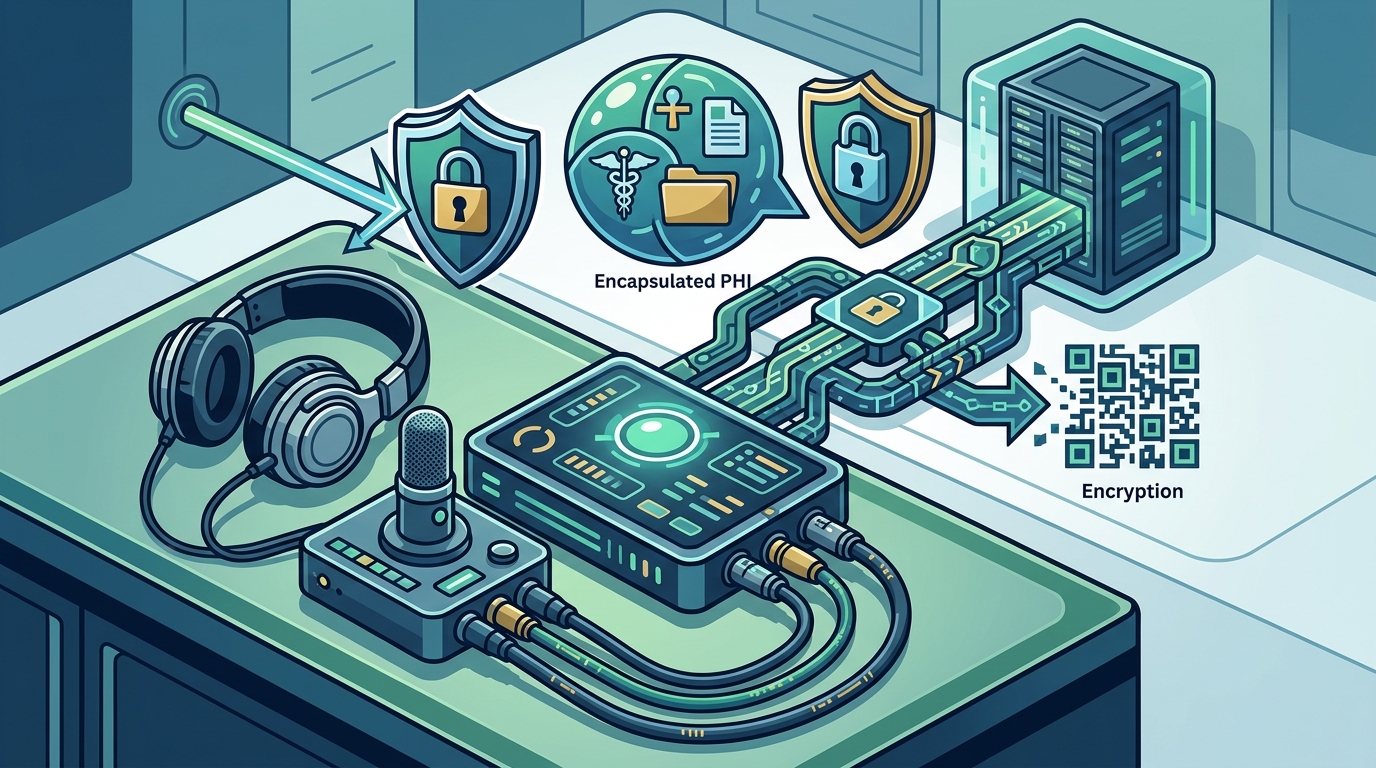
My Virtual Scribe prioritizes technical safeguards by utilizing platforms that enforce encryption at rest and in transit. This ensures that the audio feed from your exam room is scrambled during transmission and can only be decrypted by the authorized scribe. This layer of security is critical for maintaining patient trust and adhering to the Security Rule established by the U.S. Department of Health and Human Services.
Essential Hardware for Secure Audio Capture
High-quality audio capture is the foundation of accurate documentation. Physicians should use a dedicated, high-fidelity microphone positioned to capture the conversation clearly without picking up background noise. A USB condenser microphone or a dedicated medical dictation headset is often the best choice for clarity. The hardware must connect directly to a computer running the secure scribe application, avoiding any intermediate unsecured devices.
It is crucial to ensure that the microphone input is configured exclusively for the scribe software. This prevents the audio from being broadcast to other applications or cloud services that may not be HIPAA-compliant. My Virtual Scribe provides guidance on optimal hardware placement to ensure that the remote scribe hears the patient and physician clearly, reducing the need for clarifying questions and improving documentation speed.
Software Protocols and Network Security
Verifying HIPAA Compliance and Access Controls
Practices should conduct regular audits of their audio transmission logs to verify that no unauthorized access attempts have occurred. These logs should be retained for the period required by your state and federal regulations. By combining strong encryption with rigorous access controls, practices can create a defense-in-depth strategy that protects patient privacy from multiple angles.
Troubleshooting Common Audio and Security Issues
Key Takeaways
- Use end-to-end encrypted platforms that comply with HIPAA Security Rule requirements.
- Invest in high-quality, dedicated microphones to ensure clear audio capture.
- Configure your network to use WPA3 encryption and keep software up to date.
- Implement multi-factor authentication and role-based access controls for all users.
- Conduct regular audits of access logs to detect and prevent unauthorized access.
- Test your audio connection before each shift to ensure stability and low latency.
Frequently Asked Questions
Is standard Zoom or Skype secure enough for medical scribes?
What type of microphone is best for remote scribing?
A high-fidelity USB condenser microphone or a dedicated medical dictation headset is recommended. These devices provide clear audio and connect directly to the secure scribe software.